
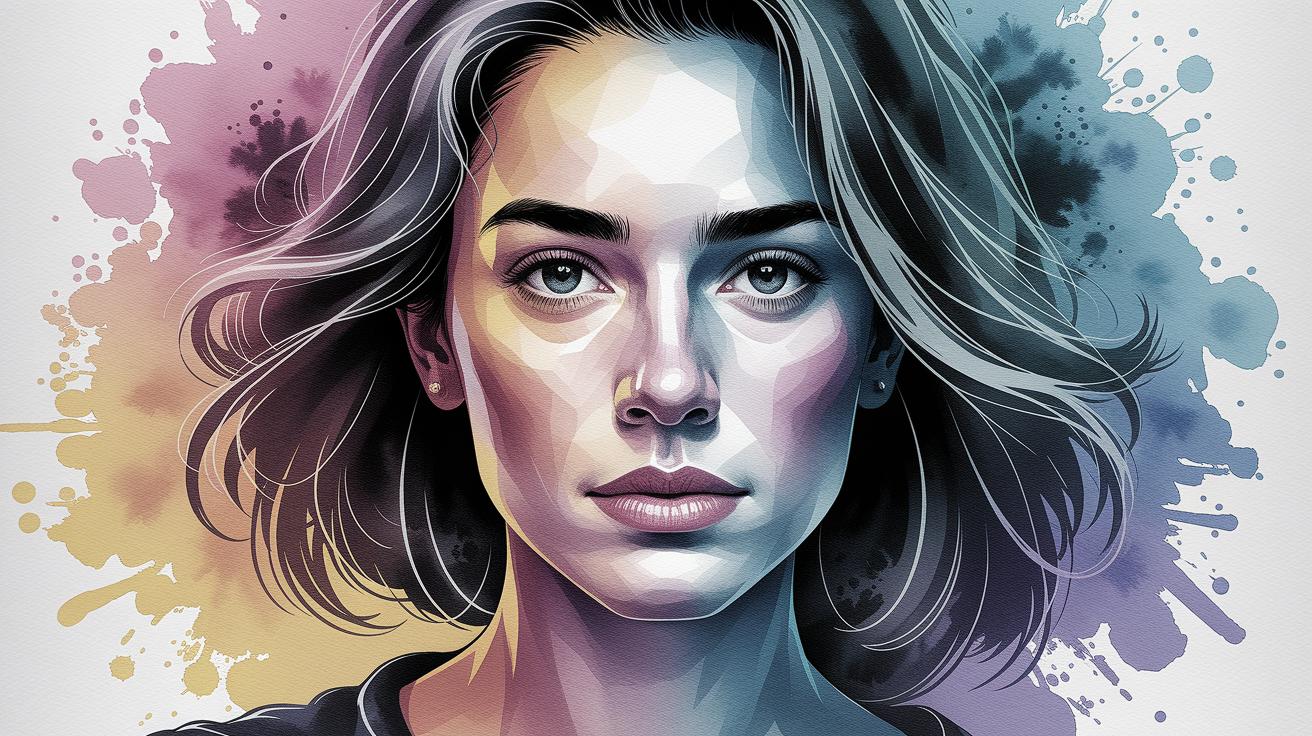
Exploring the Art of Portrait Creative Watercolor Painting
Watercolor painting is a versatile medium that offers an array of expressive possibilities, especially when it comes to creating portraits. This blog post delves into the many techniques and styles within watercolor portraiture, offering insights and inspiration for both seasoned artists and aspiring creators. From imaginative abstract creations to intricate and realistic portrayals, watercolor allows artists to capture the essence and character of their subjects with unique flair. Join us as we explore various methods such as dry brush detailing, wet into wet techniques, and the strategic use of colors and layers, each contributing to the creation of a dynamic and personal piece of art.
Colourful Portrait with Splotches
This technique involves using vivid splashes of color to breathe life into your portraits. Here, splotches are not just random marks but intentional applications that enhance the mood or character of the subject. By using a palette of vibrant hues, artists can convey emotion and movement, creating a dynamic portrait that feels alive and vibrant.
Leave areas of the face undefined while focusing on the emotional impact of color. The bold application of paint can reflect the subject’s inner world, offering viewers a deeper connection. This method encourages experimentation with color theory to see how different combinations influence the perception of the portrait.
Full Body Portrait
Creating a full-body portrait in watercolor requires a strong understanding of anatomy and gesture. The fluidity of watercolors can be leveraged to depict the natural movement and posture of the subject, capturing a snapshot of their physicality. This method allows artists to explore the relationship between the figure and their surrounding space.
Artists should consider the composition and how the subject interacts with elements like clothing and background. Light washes can define the broader shapes, while more intricate, darker tones can highlight features and details, bringing depth and complexity to the piece.
It’s All in the Face
The face is often the focal point of a portrait, where emotions and character are most vividly expressed. Watercolors can capture subtle nuances in expression through the careful layering of washes and the use of soft and hard edges.
Artists must pay special attention to the gaze, mouth, and other facial features that convey emotions. By employing a combination of wet and dry techniques, the artist can achieve realistic textures and tones that bring the portrait to life.
Dry Brush Details
The dry brush technique emphasizes texture and detail, important in crafting a hyper-realistic portrait. Using minimal water in the brush, paint is applied with controlled precision to build depth and emphasize finer details within the artwork.
This method is particularly effective for capturing intricate textures like hair, fabric, or skin reflections, enhancing the overall realism of the portrait. It requires patience and precision, blending the controlled application of color with an eye for minute details.
Wet into Wet Portrait
Wet into wet techniques offer a softer, more blended approach to watercolor portraiture. By applying wet paint onto a damp surface, colors merge and interact organically, producing gradients and transitions that evoke life and softness.
This approach is ideal for capturing the subtle and delicate shifts in tone that occur on the human face, often without harsh lines. It lends an ethereal quality to portraits, allowing for an expressive yet gentle rendering of the subject.
Greyscale Portrait
A greyscale portrait in watercolor is an exercise in value and contrast without the distraction of color. This approach concentrates solely on the play of light and shadow, allowing artists to hone their understanding of form and depth.
By forgoing color, an artist can focus on the intensity of expression and the bone structure, offering a timeless and classic view of the subject. This method trains the eye to see value and intensity, crucial for executing realistic representations.
Abstract and Colourful
Abstract watercolor portraits take creative freedom to new heights, allowing artists to express emotions and themes beyond realistic constraints. The use of splashy colors, geometric shapes, and unexpected forms can convey a narrative or emotion distinct from the literal image.
This form of portraiture invites both the artist and the audience to interpret the work on a personal level, drawing from the symbolic and the abstract to find new meanings and connections.
Realistic Full Page Portrait
A full-page realistic portrait in watercolor demands meticulous attention to detail, as every inch of the page holds importance. The artist creates a veritable mosaic of tones and textures, crafting a portrait that feels alive and multi-dimensional.
Balance is crucial in this method, as light and dark regions must be harmonized to create visual interest and coherence. Techniques such as glazing and lifting help in adjusting hues and highlights, offering the viewer a window into the subject’s soul.
Cosmic Beings
Portraits featuring cosmic elements blend reality with the fantastical, introducing universal themes into personal depictions. Watercolor’s fluidity and unpredictability suit the creation of celestial motifs, such as stars, nebulas, and galaxies.
This technique serves as a metaphorical bridge, expanding the identity and existence of the subject beyond earthly limits, prompting the audience to consider wider existential themes.
Splashes Everywhere
Using splashes in watercolor portraits can evoke energy, spontaneity, and raw emotion. By allowing colors to scatter and merge organically, the artist creates a sense of movement and vitality.
This playful technique invites viewers to experience the portrait in motion, reflecting the dynamism of human expression and life’s unpredictability. It showcases the artist’s ability to harness chaos into something meaningful and cohesive.
Blooming Perfection
The idea of blooming perfection centers on growth and transformation within a portrait. Watercolors are ideal for creating soft transitions and layers, depicting the subject’s evolution in a visual narrative.
This technique often incorporates natural motifs like flowers or vines, symbolizing growth and renewal. Such elements add depth and complexity to the portrait while serving as a metaphorical representation of the subject’s journey.
Quick Sketches
Quick sketching in watercolor embraces spontaneity and immediacy, capturing the essence rather than the specifics. These sketches often rely on minimal strokes and washes to convey the personality of the subject.
The challenge lies in depicting recognizable features with limited detail, which requires a keen understanding of essential forms and gestures. This method can develop an artist’s confidence and ability to work intuitively.
Only the Details
Focusing exclusively on a single element, such as the eyes or hands, can create a compelling narrative with watercolor. This selective attention allows for an exploration of intricate elements, deepening the connection between the portrait and the observer.
By honing in on specific details, the artist highlights the subtleties and complexities of human anatomy, revealing layers of emotion and meaning that might otherwise remain hidden.
Illustrated Portraits
Illustrated portraits in watercolor often combine realism with whimsical or fantastical elements. An artist might employ illustrative techniques to embellish or exaggerate certain features, adding a playful or narrative layer to the portrait.
This method bridges the gap between fine art and illustration, allowing for creative interpretations and storytelling through the use of carefully crafted details and imaginative settings.
A Kaleidoscope of Colour
This approach involves using a vibrant array of colors to form a portrait that is as much about the emotional aura as it is about the physical appearance. Each color choice can reflect an aspect of the subject’s character or mood.
Artists can explore unconventional palettes, drawing inspiration from personal or cultural symbols and meanings to create a resonant and visually impactful work of art.
Lines and Layers
Combining lines and layers in watercolor allows for a structured yet fluid portrayal. Defined lines can anchor the composition, while layered washes create depth, dimension, and a rich visual texture.
This technique supports a dynamic interaction between structure and fluidity, mirroring the complexity and nuance of human character and form.
Realism Watercolour Portrait
A realism watercolor portrait demands precision, observation, and patience. This technique involves building layers of color to create depth and a lifelike representation of the subject.
Attention to detail, such as the textures of skin or the reflection in an eye, are crucial. Realism challenges artists to perfectly balance light and shadow, resulting in a portrait that feels immediate and true.
Something Out Of Nothing
In creating “something out of nothing,” artists leverage watercolor’s inherent unpredictability to discover form and meaning. This can involve beginning with abstract shapes or colors and gradually inferring a portrait from the resulting imagery.
This process often reveals unexpected paths and creative possibilities, encouraging artists to remain open to discovery and the potential for transformation within their work.
Soft Portrait Painting
Soft portrait painting in watercolor is characterized by gentle transitions and minimal contrast. This method is ideal for creating serene and introspective portraits that reflect calm and tranquility.
Artists often blend soft washes to achieve subtle tones and effects, perfect for conveying emotions or states of being that are quiet yet deeply felt. The resulting portrait invites a reflective and meditative response from viewers.
Final Thoughts
| Technique | Description |
|---|---|
| Colourful Portrait with Splotches | Incorporates vibrant splashes of color to evoke emotion and life. |
| Full Body Portrait | Depicts the entire figure, exploring anatomy and gesture. |
| It’s All in the Face | Focuses on facial details and expressions to convey character. |
| Dry Brush Details | Utilizes minimal water for detailed and textured applications. |
| Wet into Wet Portrait | Applies paint on wet surfaces for soft gradients and blends. |
| Greyscale Portrait | Concentrates on value using shades of grey for depth. |
| Abstract and Colourful | Integrates abstract forms and colors for expressive impact. |
| Realistic Full Page Portrait | Emphasizes detail across the entire page for lifelike depth. |
| Cosmic Beings | Combines cosmic imagery with portraiture for universal themes. |
| Splashes Everywhere | Employs splashes to evoke energy and movement. |
| Blooming Perfection | Focuses on growth and transformation with natural motifs. |
| Quick Sketches | Captures essence with minimal strokes for spontaneity. |
| Only the Details | Highlights single elements to reveal deeper meaning. |
| Illustrated Portraits | Combines realism with whimsical elements for storytelling. |
| A Kaleidoscope of Colour | Uses a vibrant palette to explore emotional aura. |
| Lines and Layers | Mixes structured lines with layered washes for depth. |
| Realism Watercolour Portrait | Achieves lifelike representation through precise observation. |
| Something Out Of Nothing | Discover forms from abstract beginnings, open to transformation. |
| Soft Portrait Painting | Emphasizes gentle transitions for a serene portrayal. |

