
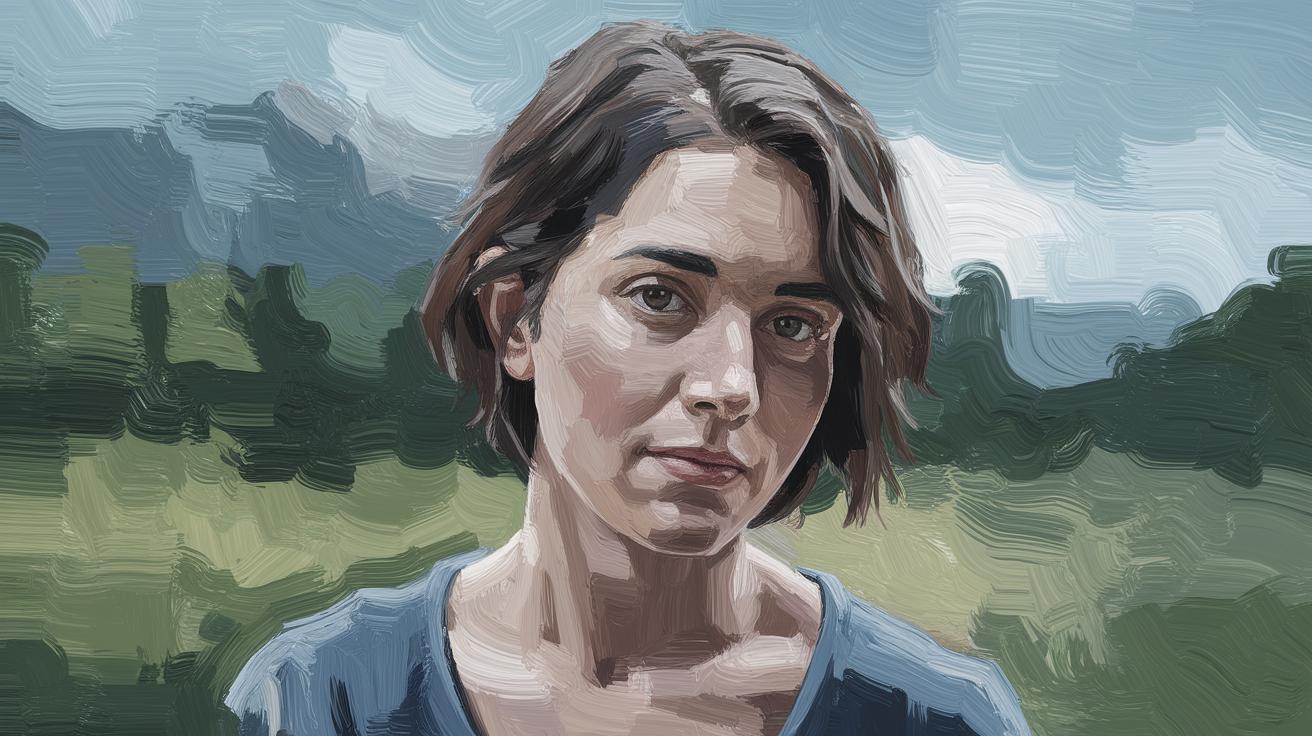
How to Paint Realistic Portraits
Painting realistic portraits requires both skill and patience. For artists looking to enhance the authenticity of their work, avoiding common pitfalls can lead to more dynamic and captivating portraits. This guide delves into 11 frequent mistakes artists make, offering practical solutions and tips for each. From understanding accurate drawing and proper priming to mastering values and subtle color use, these insights aim to elevate your portrait art. We will also explore the importance of addressing details like lighting, the portrayal of eyes and teeth, and the significance of considering background and drying times. Whether you’re refining your technique or venturing into portrait painting for the first time, these strategies will assist you in crafting portraits that truly resonate.
Mistake #1 When Painting A Realistic Portrait – Inaccurate Drawing
One of the most common mistakes when painting realistic portraits is starting with an inaccurate drawing. The foundation of a realistic portrait lies in accurately capturing the proportions and features of the subject. Errors in the initial drawing stage can result in a distorted or unbalanced portrait. Therefore, dedicating time to fine-tuning your drawing can save you from future frustration.
Issues such as incorrect placement of eyes, nose, and mouth can dramatically alter the likeness of the portrait. It’s beneficial to begin with a light sketch, allowing for adjustments and corrections. Establish guidelines that align facial features and provide a roadmap for a symmetrical and proportionate face.
Tips For Getting The Drawing Accurate On A Realistic Portrait
Consider using a grid or tracing method to accurately convey the dimensions and spatial relationships within your subjects. This can be particularly useful for beginners. Additionally, frequently stepping back to view your drawing from a distance can help identify inconsistencies that are less apparent up close.
Measuring tools, such as calipers or a ruler, can also help ensure that distances between features are correct. By taking the time to get the foundation right, subsequent layers of paint will have a much stronger underpinning. Always compare your progress with your reference image to catch any deviations early.
Mistake #2 – Not Taking Time For A Proper Value Study
Value study is crucial in creating depth and dimension in a portrait. Skipping this step can result in flat images that lack the illusion of three-dimensionality. Values help define the light and shadow areas, crucial for the realistic portrayal of form and texture.
Conducting a value study allows artists to experiment with light and dark contrasts before committing to color. This process is a roadmap for integrating contrast and intensity, providing a blueprint for color application later on. It brings clarity to the complex interplay of lighting on facial features and expressions.
Mistake #3 – Painting On A Surface That Isn’t Properly Primed
Using an improperly primed surface can seriously impact the longevity and appearance of your portrait. Oils and other mediums require a well-prepared canvas to adhere correctly; otherwise, you risk blotching, uneven texture, or eventual cracking.
Priming seals the canvas and provides a smooth surface, increasing the brightness and vibrancy of colors. Consider applying multiple coats of gesso, sanding in between to achieve an ideal texture. This preparedness ensures that each stroke of paint will interact predictably with the surface.
Mistake #4 When Painting A Realistic Portrait – Poor Lighting
Lighting is a crucial element in how a portrait is perceived. Poor lighting conditions during the painting process can obscure the nuances of colors and contrast, leading to a less accurate representation. Additionally, poor lighting may result in unintentional color mixing and inconsistencies.
Ensure your workspace is well-lit, ideally with a combination of natural and artificial light. This setup allows for a more accurate perception of colors and aids in capturing subtle shifts in tone and texture as you work. Utilize daylight bulbs to mimic natural light and avoid heavy casts of shadow over your workspace.
Mistake #5 – Painting The Whites Of The Eyes Too White
A common mistake beginners make is using pure white to paint the sclera, or the whites of the eyes. This can result in an unnaturally stark appearance that disrupts the realism of the portrait. The sclera typically has nuanced undertones that should be considered.
Tips For Painting Eyes
When painting eyes, observe closely the colors present in the sclera under different lighting conditions. They often include hints of blue, gray, or ochre due to veins and the surrounding light reflections. Use a mixture of these hues to create a natural look.
It’s also beneficial to focus on the transitions within the iris and reflections on the cornea to provide depth and realism to the eyes. The eyes express the soul of the portrait and deserve detailed attention to retain a lifelike quality.
Mistake #6 When Painting A Realistic Portrait – Painting Lines On Teeth
Painting delineated lines between teeth can inadvertently age or stylize a portrait rather than contributing to a realistic depiction. Natural teeth have subtle imperceptible lines, and avoiding harsh separations can help maintain realism.
Tips For Painting Teeth
Instead of painting lines, focus on the subtle curves and variances in tone that give teeth structure. Light and shading play critical roles in defining them without explicit lines. Consider the interplay of light and shadow that define the individual teeth.
Lost Edges
Utilize lost edges, where the edges of the teeth blend with the surrounding shadows of the mouth, to suggest form rather than drawing every detail. This technique enhances the naturalness without sacrificing clarity and is a hallmark of sophisticated portrait paintings.
Mistake #7 When Painting A Realistic Portrait – Too Much Color
Overusing vibrant colors can shift a painting from realistic to surreal, detracting from a true-to-life depiction. It’s vital to exercise restraint and subtly incorporate hues that naturally occur in skin tones.
The Zorn palette consists of:
A limited palette such as the Zorn palette, comprising yellow ochre, vermilion, ivory black, and titanium white, offers a wide range of realistic flesh tones without an overwhelming array of colors. This constraint encourages creativity and more controlled color harmony.
The Zorn palette’s reduction highlights the importance of value and temperature over color saturation, aligning closely with the principles of nature and resulting in realistic and cohesive portraits.
Mistake #8 – Inaccurate Values
Values are instrumental in conveying the depth and dimension of a portrait. Inaccurate values can lead to elements of the painting appearing flat or disproportionate. Establishing accurate value ranges from the start can vastly improve the final outcome.
Tips For Painting Values
Regularly squinting at your painting can simplify complex colors and help you accurately gauge their values. Creating thumbnail sketches or digital mockups can also help test value arrangements before applying them to your main canvas.
Experiment with a black-and-white photo of your subject and your painting to focus purely on values. This comparison highlights discrepancies and helps to correct them efficiently.
Mistake #9 When Painting A Realistic Portrait – Over Blending
Over blending can homogenize colors and diminish textural detail crucial for portraying authenticity. While blending can create smooth transitions, it’s vital to retain some variation and texture to convey a natural surface.
Instead of extensively blending every area, prioritize blending where soft transitions are imperative and retain textural strokes where needed for detail or contrast. Varied brushwork enriches the portrait’s vitality and interest.
Mistake #10 – Adding Too Much Detail Everywhere On A Realistic Portrait
Although attention to detail is necessary, excessive detailing can overwhelm the viewer. Not every part of the portrait demands the same level of focus; strategic focal points can elevate the painting.
Identify sections that require precision while allowing peripheral areas to remain more suggestive. This controlled focus draws attention to key features like the eyes or mouth where viewers naturally look first.
Mistake #11 – Adding Background Too Late
Ignoring the background until later stages can lead to issues with color integration and depth. The background should be considered alongside the subject to ensure a cohesive composition.
A carefully thought-out background can not only frame the portrait, enhancing its overall appeal but also balance the composition and guide the viewer. Integrate it early to maintain harmony and avoid incompatible contrasts.
Here is a quick review of the 11 mistakes to avoid when painting a realistic portrait:
- Inaccurate Drawing
- Not Taking Time For A Proper Value Study
- Painting On A Surface That Isn’t Properly Primed
- Poor Lighting
- Painting The Whites Of The Eyes Too White
- Painting Lines On Teeth
- Too Much Color
- Inaccurate Values
- Over Blending
- Adding Too Much Detail Everywhere
- Adding Background Too Late
3 More Tips On Painting A Realistic Portrait
1. Finishing The Painting
Identify a clear point to stop, avoiding overworking areas. Allow the paint to cure before returning for touch-ups, as some corrections become evident only upon drying. Returning later with fresh eyes offers perspective on necessary adjustments.
2. Adding Subtle Complementary Colors
Integrating complementary colors can enrich a portrait’s vibrancy. Explore slight color deviations in shadowed areas to contribute depth without altering overall harmony. This technique offers realism through naturalistically contrasting elements.
3. Clothing Details In A Realistic Portrait
Consider clothing’s texture and pattern carefully to avoid detracting from the facial portrait. Subdue clothing details to ensure faces remain the painting’s focal point. Select muted, complementary hues aligned with the subject for cohesion.
Drying Times For Oil Painting
Understanding and respecting oil paint drying times can significantly affect the painting process. Each layer should semi-dry before adding new details to prevent inadvertent mixing or lift-off. Be patient; rushing layers can lead to muddied colors or cracked final works.
Monitor environmental conditions that can influence drying times, such as humidity and temperature, and adapt appropriately by providing good ventilation and a dust-free environment if needed.
The Finished Portrait
Completing a realistic portrait requires managing numerous elements harmoniously. The process is a balance of precision in technique, a discerning eye for details, and a dynamic interpretation of light and color. With practice, each piece adds to the mastery of this fine art.
Thank you for stopping by!
We hope these insights into painting realistic portraits assist you on your artistic journey. Each brushstroke in your paintings serves as a step forward in your evolving craft.
Future Prospects
| Mistake | Key Points |
|---|---|
| Inaccurate Drawing | Importance of proportional accuracy; use aids like grids |
| Skipping Value Study | Defines form and light; experiment with contrasts |
| Unprimed Surface | Affects paint adherence; ensures vibrant colors |
| Poor Lighting | Influences color perception and blending |
| Eyes Too White | Avoid using pure white; incorporate subtle tones |
| Teeth Lines | Promote subtle shading over outlines |
| Overuse of Color | Use restrained palettes like Zorn’s |
| Inaccurate Values | Use grayscale references; squint for clarity |
| Over Blending | Balance smoothness with vital texture |
| Excessive Detail | Focus on key areas; not every detail needs emphasis |
| Late Background Addition | Plan background early for cohesive composition |

