
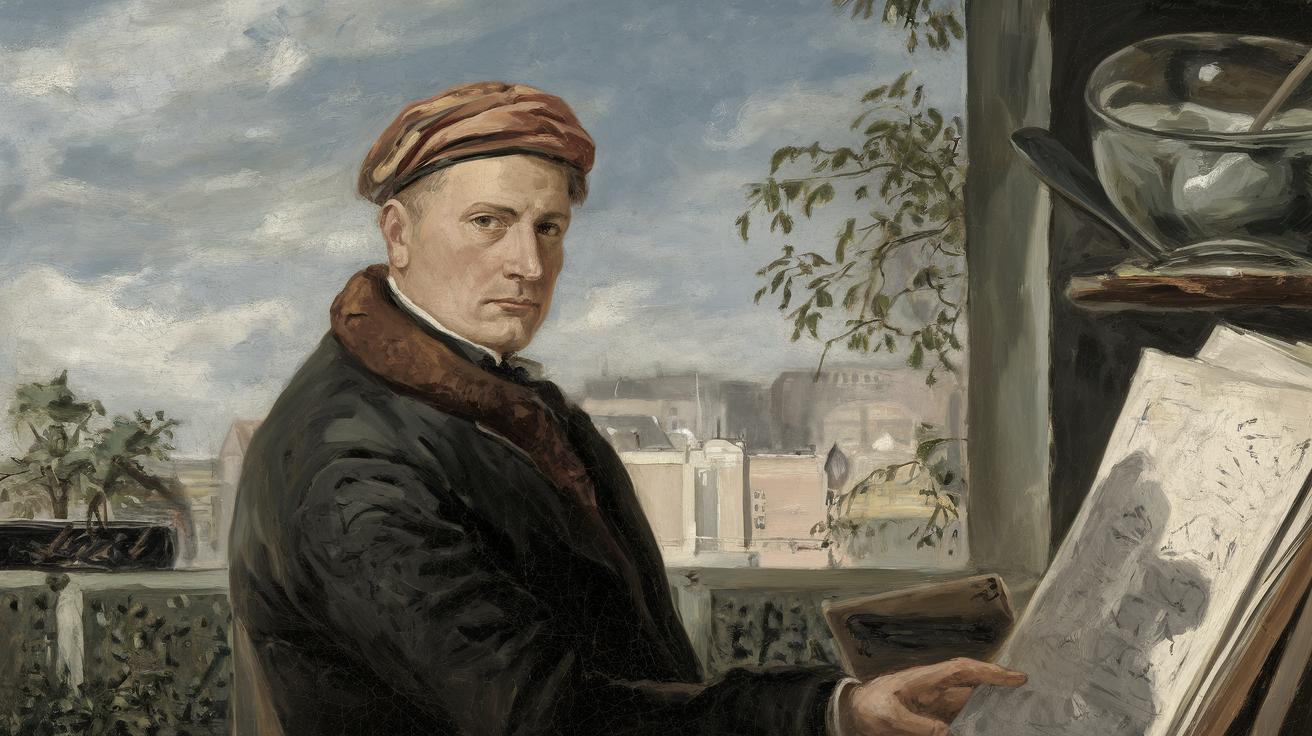
Anders Zorn’s Self-Portrait: A Masterpiece of Introspection
Anders Zorn, a Swedish artist celebrated for his adept skill in watercolors and oil painting, immortalized his enigmatic presence through a series of self-portraits that continue to captivate art enthusiasts worldwide. Among these, “Self-Portrait in Red” stands out as a testament to his introspective and creative prowess. This blog post delves into the rich details of this self-portrait, exploring the context of its creation, the magnificent medium, and the story captured within its strokes. Additionally, we delve into Zorn’s artistic journey, unraveling the complex interplay between his personal and professional life that is subtly interwoven into this work. Join us as we dissect the nuances of “Self-Portrait in Red,” providing an extended exploration with detailed insights and fascinating tidbits about its current status and place in the art world.
Title
When an artist creates a self-portrait, they capture more than just their likeness; they encapsulate a moment of self-reflection and revelation. Anders Zorn’s “Self-Portrait in Red” is no exception, offering a profound glimpse into the artist’s psyche. This title aptly conveys not only the visual focus on red hues but also hints at the fiery passion and intensity that Zorn infused into his art and life.
The title itself suggests a bold statement, deviating from the more subdued palettes often associated with portraits. “Self-Portrait in Red” invites viewers into a world where color and emotion intertwine, giving a tangible voice to the inner workings of Zorn’s mind. The choice of red is symbolic, perhaps reflecting the warmth, vitality, and fierce independence that characterized Zorn himself.
Artist
Anders Zorn, born in 1860 in Mora, Sweden, rose to prominence at the turn of the 20th century. Known for his mastery across multiple mediums including watercolor and oil, Zorn’s portraits captured his subjects with striking realism and depth. His ability to convey emotion and character made him a favorite among the elite factions of society, securing his reputation across Europe and America.
Zorn’s journey as an artist is marked by success and innovation. His techniques revolutionized portraiture, blending traditional styles with modern sensibilities. Zorn’s ability to see beyond the surface, capturing the essence of his subjects, is palpably present in his self-portraits, where each brushstroke echoes his introspection and artistic evolution.
Date
“Self-Portrait in Red” was completed in a time when Zorn was at the height of his career, during the late 19th and early 20th centuries. This period was significant in art history as it merged the Industrial Age’s progress with a flourishing of new artistic expressions. Zorn’s timing was impeccable; his work reflects both the era’s technological advancements and its cultural shifts.
The specific date of inception and completion adds layers to understanding the painting’s context. This period found Zorn deeply introspective and confident, traits which are boldly displayed in his self-portrait. The date isn’t merely a marker of time but a testament to the mature equilibrium of a seasoned artist reflecting on his journey.
Medium
Anders Zorn’s choice of medium for “Self-Portrait in Red” demonstrates his remarkable expertise and adaptability. Renowned for his exceptional skill in watercolor, Zorn also embraced oil painting, which allowed him to explore deeper, richer hues and textures that infuse his self-portrait with life and vibrancy.
The medium used in creating this artwork plays a crucial role. Oil paints provided Zorn the opportunity to experiment with texture and depth, layering emotions with every stroke. The medium transports viewers, drawing them into a tangible and immersive experience, granting access to Zorn’s world not merely as an observer but as a confidant to the artist’s intimate self-study.
Dimensions
The dimensions of “Self-Portrait in Red” contribute substantially to its impact. While specific measurements are often overlooked, they play a critical role in guiding viewer interaction and perception. Zorn balances size with subject, ensuring that the portrait commands attention without overwhelming the observer.
This delicate balance achieved by Zorn allows for an engaging yet personal encounter with the piece. By optimizing both scope and scale, Zorn creates a window into his creative space, inviting audiences to pause and dwell in the moment of examination he captured effortlessly on canvas.
Credit Line
The credit line accompanying artwork provides insight into its provenance, showcasing the journey from artist to collector, gallery, or museum. In the case of “Self-Portrait in Red,” understanding the credit line offers perspective on its cultural significance and the shared recognition it receives within art institutions.
This self-portrait’s inclusion in notable collections or exhibitions symbolizes the esteem held for Zorn and his work. It demonstrates not only Zorn’s mastery but also his enduring influence on the artistic community, ensuring that his vision continues to inspire and provoke thought within audiences globally.
Reference Number
A reference number associated with a painting like “Self-Portrait in Red” serves as an identifier, cataloging it within the network of collections or museum inventories. This number ensures that the painting is documented with precision, allowing for efficient management and accessibility within the art world.
Beyond organization, reference numbers are crucial for scholarly research, authentication processes, and ensuring the painting’s legacy is maintained with respect to its provenance and historical importance. Zorn’s self-portrait is thus not merely a visual creation but a documented piece of cultural heritage.
About this artwork
“Self-Portrait in Red” – A Hidden Procession
“Self-Portrait in Red” invites viewers to witness a less visible procession: that of the artist’s internal dialogue. The keen use of red serves as a conduit for expressing Zorn’s vibrant inner world, hinting at feelings and thoughts that are both personal and universal. This visual narrative diverges from traditional portraiture by delving into the psychological landscapes Zorn traversed during its creation.
Analyzing this self-portrait reveals the intricate layers of Zorn’s perception of himself and his art. Far from creating mere documentation of appearance, Zorn presents a depiction entwined with narrative and emotion, wielding his brush as both a weapon and balm. The artwork thus becomes a silent procession of introspective conversation, bridging the realm of the artist’s gaze and the observer’s interpretation.
Extended information about this artwork
A deeper examination of “Self-Portrait in Red” uncovers intricate details and historical contexts that enhance appreciation. Zorn’s work is marked by technical brilliance and depth of perspective, providing multifaceted insights. This self-portrait is an embodiment of his desire to push boundaries, explore new techniques, and articulate the essence of human spirit through art.
Extended information draws in chronological and thematic elements, intertwining Zorn’s personal history with broader art movements that influenced his style. The portrayal provides a snapshot of Zorn’s late-career motivations, capturing an artist oscillating between convention and innovation, a reflection mirrored through the nuances of brush and pigment within this remarkable piece.
Department
The department responsible for “Self-Portrait in Red” plays a pivotal role in preserving and presenting the artwork, drawing attention to its artistic and cultural merits. Departments dedicated to curation and research ensure the portrait is not only maintained physically but also contextualized within art historical frameworks.
Departments often facilitate exhibitions and educational initiatives, encouraging public engagement with the artwork. By housing Zorn’s self-portrait, these departments foster an appreciation of his contribution to art, inviting viewers to explore and revisit the themes immortalized within this seminal piece.
Place
Understanding the place where “Self-Portrait in Red” resides adds another layer to its story. Place impacts how the work is perceived and interacted with, influencing cultural dialogues and personal interpretations. Whether housed in a prominent museum or private collection, the work’s location speaks to its accessibility and the dialogues it inspires among audiences.
Place also affects an artwork’s conservation, dictating environmental conditions that ensure its endurance. Zorn’s self-portrait, in its appointed location, becomes a beacon of artistic achievement, drawing varying interpretations from diverse audience demographic attracted to the site.
Status
The status of an artwork such as “Self-Portrait in Red” discusses its availability and condition, often reflecting wider matters within art circles. Whether displayed in a gallery or loaned for exhibitions, its status draws attention to the conservation efforts and the logistical orchestration necessary to maintain its pristine condition.
An artwork’s status also influences public and scholarly discourse, directing discussion panels, critique, and further artistic exploration. Through its status, Zorn’s portrayal remains an active participant within the living history of art, contributing to the vibrancy and continuity of artistic tradition and innovation.
Currently Off View
While “Self-Portrait in Red” might currently be off view, this status does not diminish its relevance or impact. Instead, it opens an opportunity for contemplation on the nature of art and its endurance beyond the visible spectrum. Art’s life is cyclical, often rotating between different states of public access or introspection.
The work’s current status invites anticipation around future exhibitions, ensuring that it remains fresh within public mindsets. The temporary absence of the self-portrait from physical space challenges art lovers and critics to engage in discussions about artistic intention, fulfillment, and legacy beyond immediate observation.
Image Actions
Image actions related to “Self-Portrait in Red” provide interactive elements for engagement. These might include zoom features or descriptive contextual tools that allow deeper exploration of Zorn’s artistry and technique. Actions associated with imagery transform a static view into a dynamic, educational encounter.
Modern technology expands access to Zorn’s self-portrait beyond physical viewing rooms, offering digital platforms for users across the globe to appreciate and study the work. Image actions enhance the interpretative experience, bridging the gap between traditional enjoyment and modern technological advances.
Share
The capacity to share “Self-Portrait in Red” digitally enriches its reach, ensuring Zorn’s contribution to art resonates globally. Sharing technological capabilities empower audiences to engage collectively, fostering discussions and considerations around this masterpiece’s themes and implications.
Sharing digital access elevates the inclusivity of art interpretation, bridging geographic and demographic divides. By amplifying Zorn’s artistic expression through networks, the self-portrait achieves a form of timeless immortality, perennially inspiring and challenging perceptions.
Final Thoughts
| Aspect | Details |
|---|---|
| Title | A vivid exploration of Zorn’s introspection through “Self-Portrait in Red.” |
| Artist | Renowned Swedish artist Anders Zorn, known for mastering various mediums. |
| Date | Created during the late 19th to early 20th century, showcasing Zorn’s artistic height. |
| Medium | Oil on canvas, allowing depth and rich textures. |
| Dimensions | Strategically optimized for an engaging but intimate viewer experience. |
| Credit Line | Highlights the transformational journey from creation to present reverence. |
| Reference Number | Ensures precise documentation within art networks and scholarly resources. |
| Status | Currently off view, preserving anticipation for future exhibitions. |
This HTML blog post should provide a comprehensive exploration of Anders Zorn’s “Self-Portrait in Red,” complete with detailed analysis and a structured breakdown of its key elements.