
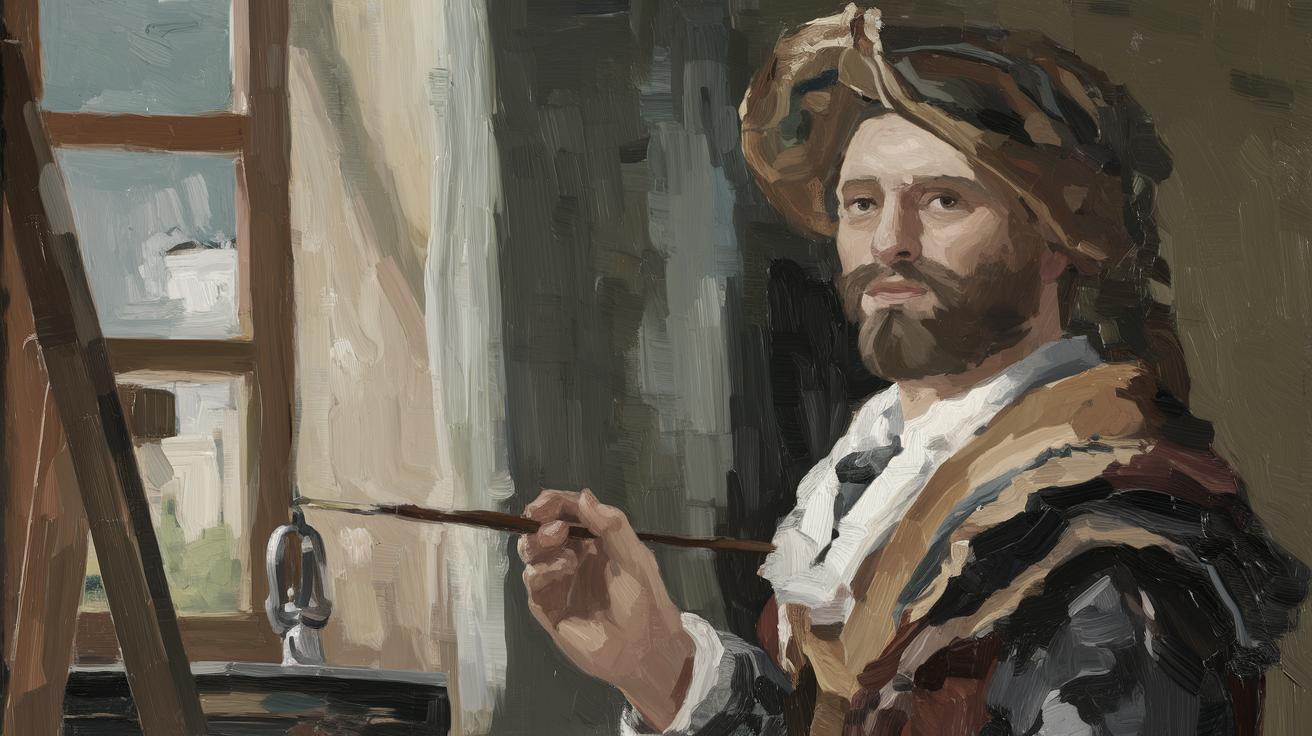
Self-Portrait as a Painter
Art is a deeply personal journey, a pathway where each brushstroke is a step in one’s self-expression. This blog post explores various techniques and inspirations that guide an artist through the creation of evocative self-portraits. By understanding the value of quick sketches, focusing on the uniqueness of subjects like flowers and birds, and emphasizing design and values, artists learn to express more with their creativity. Join me as I dive into the nuances of artistic expression, offering exercises and perspectives to enrich your painting endeavors, whether through a vivid painting of “Old Copper and Fruit” or the delicate portrayal of a single iris.
10-Minute Thumbnail Sketch Challenge: Birds
A thumbnail sketch is a small, simple sketch that serves as a quick, expressive exploration of an idea. For artists looking to hone their skills, a 10-minute thumbnail sketch challenge centered around birds offers a wonderful opportunity. Birds, with their delicate forms and dynamic movements, present unique challenges that encourage rapid decision-making and instinctive mark-making.
During these sketches, focus on capturing the essence and posture of the bird, rather than the details. This exercise emphasizes spontaneity and builds confidence in making swift, decisive strokes. These sketches serve as the artist’s shorthand, a method to play with composition and movement before committing to a larger work. The challenge lies in distilling the complex beauty of birds into a loose interpretation that speaks volumes in its simplicity.
A Floral Spotlight: Each Iris Has Its Own Personality
Flowers, like the iris, provide a distinct opportunity to explore individuality within a series of paintings. Each iris seems to have its own personality, characterized by variations in color, shape, and form. Artists can benefit from spending time with these captivating subjects, noting how each flower’s particular traits contribute to its story.
In painting irises, focus on the subtle differences that define each bloom. Pay attention to how light interacts with petals, casting shadows that add depth and realism. This attention to detail allows artists to elevate their work, transforming a simple floral painting into a study of nature’s diversity and the unique identity found in every subject.
Starting a Painting with Design and Values
The foundation of a successful painting lies in the artist’s ability to design the composition and establish strong value contrasts. Before picking up the brush, conceive the painting’s structure, focusing on how elements will interact and guide the viewer’s eye. This planning stage is crucial for maintaining coherence and purpose in your artwork.
Values, or the lightness and darkness of colors, play a pivotal role in creating contrast and drama in a painting. By initially working in a monochromatic palette, artists can establish a framework of tonal values, ensuring that the final painting will have a strong visual impact. This approach lays the groundwork for layering colors and textures, leading to a more compelling and harmonious narrative on canvas.
Indicate, Don’t Illustrate
There’s a significant distinction between indicating and illustrating when it comes to painting. Illustrating involves detailing everything meticulously, while indicating focuses on suggesting forms and letting the viewer fill in the gaps. This technique invites mystery and engagement, as the observer becomes an active participant in interpreting the work.
By using broad strokes and employing a limited color palette, artists can suggest rather than depict. This approach frees the painting from the constraints of realism, allowing for abstract interpretation and emotional expression. Learning to indicate effectively can transform a painting, adding depth and intrigue through simplicity and suggestion.
Painting of the Week: “Old Copper and Fruit”
The painting “Old Copper and Fruit” serves as a masterclass in balancing compositional elements and thematic contrast. This piece challenges artists to explore texture, light, and shadow as they convey the timeworn beauty of copper against the lushness of ripe fruit. Through this juxtaposition, the work tells a story of age and vitality, seeking harmony between antiques and natural forms.
Artists focusing on a similar subject can benefit from experimenting with techniques that highlight the reflective and mottled surfaces of metallic objects, contrasted with the organic forms of fruit. This exercise deepens one’s understanding of textural contrast, encouraging study of the subtleties of light reflection, shadow play, and the rich, diverse palette involved in portraying aged metal objects in a vibrant setting.
Final thoughts
The journey of creating a self-portrait as a painter involves more than just capturing one’s likeness. It requires deep introspection and an exploration of different techniques and subjects. As artists engage with challenges like sketching birds, understanding the individuality of irises, or painting the evocative “Old Copper and Fruit,” they enrich their skill set and creative vision. Each brushstroke, each lesson learned, contributes to the layered narrative of the artist’s self-portrait, shaped not only by the medium but by the artist’s unique voice and perspective.
| Subheading | Overview of Content |
|---|---|
| 10-Minute Thumbnail Sketch Challenge: Birds | Explores quick decision-making and essence capture through rapid sketches of birds. |
| A Floral Spotlight: Each Iris Has Its Own Personality | Discusses the unique characteristics of irises and their portrayal in art. |
| Starting a Painting with Design and Values | Emphasizes the importance of planning and value contrast in successful paintings. |
| Indicate, Don’t Illustrate | Highlights the approach of suggesting rather than detailing to evoke viewer engagement. |
| Painting of the Week: “Old Copper and Fruit” | Analyzes techniques for portraying contrasting textures and themes. |