
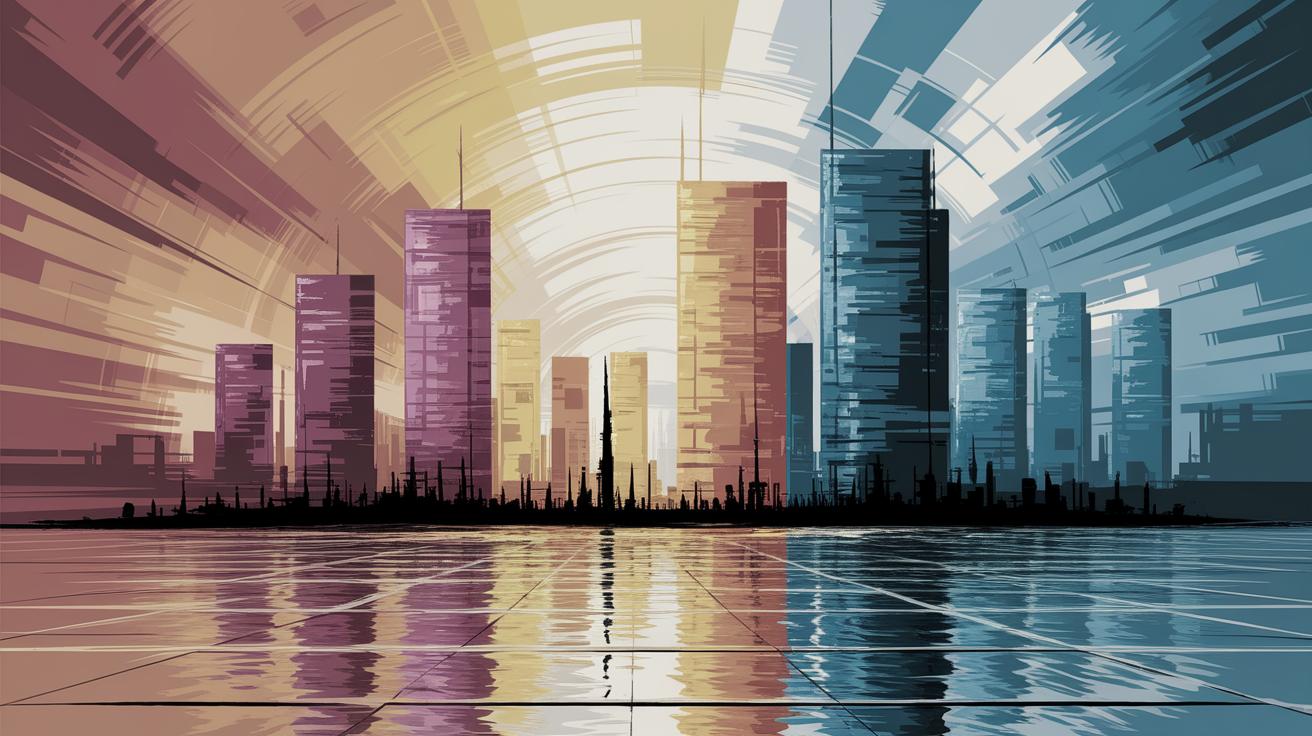
The Art of Modern Creative Composition Painting
Modern creative composition painting is an artistic endeavor that marries technique with innovation. This blog post delves into the fundamental elements of artistic composition that contemporary painters utilize to craft compelling visual narratives. We explore how lines, shapes, color, and other integral elements work harmoniously to create evocative art pieces. From understanding the significance of visual weight and focus to employing mathematical principles like the Golden Mean, this article serves as an insightful guide into the intricate world of modern painting. Whether you are an aspiring artist or an avid art enthusiast, these concepts offer a glimpse into the multifaceted process of creating art that speaks to the soul.
Lines
Lines are the foundation of any artwork, serving as the skeleton upon which artists build their compositions. In modern creative painting, lines can vary significantly—ranging from bold, decisive strokes to delicate, whispered traces. They guide the viewer’s eye across the canvas, creating movement and energy. Linear directionality can emphasize dynamism, while horizontal and vertical lines might suggest stability and calm.
Beyond simple direction, lines can convey emotion. A jagged, erratic line might communicate chaos or tension, whereas smooth, flowing lines suggest harmony and fluidity. Artists use lines not only to outline elements but also to generate texture, depth, and rhythm, shaping the viewer’s emotional response.
Shapes
Shapes are elementary to composition in painting, forming the building blocks of visual representation. Artists rely on geometric and organic shapes to construct and deconstruct the elements within a painting. Geometry imparts a sense of order, while organic forms evoke natural, flowing arrangements.
Modern creative compositions embrace both traditional and innovative approaches to shapes. Abstract art, especially, pushes boundaries by distorting and juxtaposing shapes, inviting viewers to participate in meaning-making. Through the strategic use of positive and negative space, shapes help direct attention and create balance within an artwork.
Color
Color breathes life into paintings, transforming static scenes into vibrant experiences. Modern painters understand the psychological impact of color, skillfully deploying palettes to evoke specific emotions. The interplay between complementary and analogous colors can energize a piece or seamlessly guide the viewer’s emotions.
Beyond its emotional resonance, color serves practical purposes in highlighting, contrasting, and harmonizing various compositional elements. Through color temperature and saturation, artists can manipulate mood, suggest lighting changes, and simulate depth, making it a versatile tool in modern creative compositions.
Value
Value refers to the lightness or darkness of a color, crucial in creating dimension in painting. Artists use value to imply volume and form, as well as to establish a focal point through contrast. By mastering value, painters give life to two-dimensional surfaces, imbuing them with a convincing sense of realism.
In modern compositions, striking high-contrast works capture immediate attention, while subtle value variations create quiet introspection. Value contrasts help separate elements in a composition, making it essential for spatial differentiation and emphasizing visual hierarchy.
Form/Mass
Form and mass contribute to the perception of three-dimensionality in paintings. While form is the shape of a given object within the painting, mass suggests its physical weight. Modern painters pay attention to how the viewer will perceive the “mass” — even on a flat surface — by manipulating form through shading, texture, and perspective.
Using distortion of form, artists question reality and prompt viewers to engage with alternative interpretations. This engagement is a hallmark of modern composition. Through careful arrangement, a painting’s form can lead viewers on a journey through fabricated spaces, amplifying the personal impact of the artwork.
Edges
Edges in painting determine the transition between forms, crucial for creating realism and depth. Soft edges blend into their surroundings for a smoother tonal transition, while hard edges provide definition and clarity. The skilled manipulation of edges draws the viewer’s focus, creating emphasis or a sense of mystery.
Modern creative compositions frequently employ ambiguous or lost edges to foster a sense of abstraction, leaving interpretation open-ended. This intentional blurring guides aesthetic exploration, encouraging viewers to immerse themselves in the artist’s conceptual world.
Texture
Texture gives two-dimensional paintings a tactile quality, suggesting what an object might feel like if touched. Artists utilize varied techniques to create textures, ranging from impasto to the precise application of thin glazes. The juxtaposition of different textures can enhance realism or heighten the viewer’s emotional response.
In modern compositions, texture not only contributes to authenticity but also to abstraction. Artists might defy traditional textural expectations to challenge preconceived notions and draw attention to the medium’s physicality, adding depth to the conceptual understanding of the artwork.
Perspective/Depth/Space
Perspective, depth, and space are integral components in creating an illusion of three-dimensionality. Modern artists extend beyond traditional perspective techniques, manipulating space to play with viewer perception. Linear perspective remains a foundational tool, but atmospheric perspective and spatial ambiguity are pushed to new creative limits.
Through the creative bending of space, artists engage the viewer in unexpected ways, prompting them to interact with the artwork imaginatively. This departure from expected norms typifies modern composition, where space becomes a playground for new ideas.
Pattern
Physical Patterns
Patterns, consistent in some form, establish rhythm and can imbue compositions with structure. Artists may use repeating motifs or textures to guide the viewer’s eye or to create uniformity within a piece. These tangible repetitions influence the rhythm and pace of viewing, leading to a cohesive interpretation.
Abstract Patterns
Abstract patterns take pattern-making to different conceptual planes, encouraging new interpretations. Instead of precise repetition, implied or disrupted patterns challenge viewers’ visual expectations, opening compositions to multiple readings and promoting a dynamic interaction with the artwork.
Dominance/Emphasis/Focus
Dominance, emphasis, and focus are critical for directing viewer attention and conveying the painting’s core message. Through contrast, scale, or position, artists create a focal point that emerges as the anchor of the composition. This element of emphasis guides the narrative and emotional narrative of the artwork.
Modern compositions might subvert traditional notions of dominance by dispersing focal points or using minimalism to provoke viewer engagement. This non-conventional approach fosters a participatory experience, pushing viewers to explore beyond the obvious.
Proximity
Proximity refers to the spatial grouping of elements within a painting, influencing the perception of relation and cohesion. By positioning elements closely or distantly, artists imply relationships, narratives, and hierarchies, shaping the visual dialogue of the composition.
Modern painters experiment with proximity by juxtaposing incongruous elements or harmoniously blending subjects to challenge traditional perceptions. This exploration creates tension and unity, encouraging viewers to derive meaning from spatial relationships.
Similarity
Acknowledging similarity within a composition encourages coherence and connection among elements. By finding commonalities in color, shape, or texture, artists weave a consistent narrative or thematic undercurrent through their work, forming a unifying thread for viewers.
Modern artists might exploit similarity for unexpected surprise, subtly transforming a repeated element to support evolving dynamics within the piece. This balance between consistency and change enriches the viewer’s experience and interpretation.
Closure
Closure allows viewers to mentally fill in missing information within a painting, fostering engagement and personal interpretation. By leaving elements implied rather than spelled out, artists invite an active participation in viewing, enriching the emotional and intellectual connection to the work.
Modern creative composition embraces the power of suggestion extensively. By skillfully integrating partial images or ambiguous elements, artists harness the viewer’s imagination, promoting a dialogic rather than a didactic interaction with the piece.
Continuity or Continuation
Continuity, or continuation, is essential in creating a sense of flow within an artwork. Artists lead the viewer’s eye across the canvas through orchestrated lines, colors, or forms, maintaining engagement and cohesiveness. It is this visual pathway that grants a painting its rhythm and momentum.
Modern compositions often play with continuation by abruptly disrupting expected paths, inviting viewers to jump between visual elements in unexpected ways, thereby making the act of viewing an exploration rather than a passive experience.
Turn Fibonacci Numbers into the Golden Mean
The relationship between mathematics and art has long been recognized, with the Fibonacci sequence and the Golden Mean being prime examples of this convergence. Artists employ these principles to craft compositions that resonate with innate human sensibilities towards proportion and harmony.
The Fibonacci sequence, when translated into the Golden Mean, offers a tool for creating naturally pleasing arrangements. In modern compositions, this principle guides the asymmetrical balance characteristic of dynamic, engaging paintings, subtly orchestrating viewers’ experiences through numerical beauty.
Summary of Main Points
| Element | Function in Modern Composition |
|---|---|
| Lines | Create movement, guide the eye, and convey emotion. |
| Shapes | Build visual representation using geometric and organic forms. |
| Color | Evoke emotion, highlight, contrast, and harmonize elements. |
| Value | Imply volume, establish focal points, and create realism. |
| Form/Mass | Create the illusion of three-dimensionality and weight. |
| Edges | Create realism and depth, guide focus and create mystery. |
| Texture | Suggest tactile quality, enhance realism, and contribute to abstraction. |
| Perspective/Depth/Space | Create three-dimensionality, manipulate perception. |
| Pattern | Establish rhythm, create structure, and surprise through abstraction. |
| Dominance/Emphasis/Focus | Direct attention, convey the painting’s message. |
| Proximity | Imply relationships and create narrative. |
| Similarity | Create coherence and connections among elements. |
| Closure | Encourage viewer engagement and personal interpretation. |
| Continuity or Continuation | Create flow and rhythm within the artwork. |
| Fibonacci/Golden Mean | Create harmonious compositions that appeal to human sensibility. |