
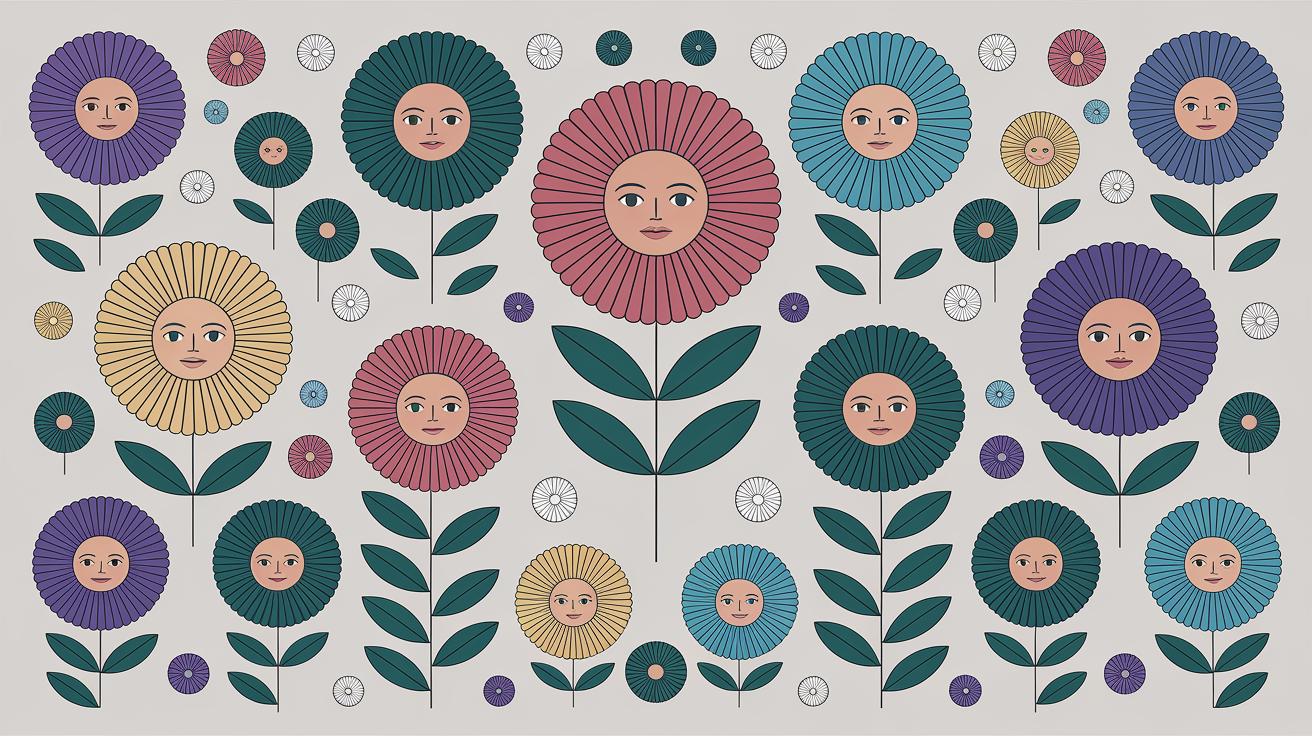
Exploring the Art of Flowers with Faces Drawing
In this blog post, we dive into the whimsical world of flowers with faces drawing and explore how artists infuse personality into their floral interpretations. Featuring over 26,000 royalty-free vectors of smiling floral figures, we’ll delve into techniques for capturing the essence of photorealistic still lifes, as well as portrait and floral paintings. Alongside a discussion on art scams and a quick sketch challenge, we’ll cast a spotlight on the unique character of each iris and examine foundational painting techniques. By the end, you’ll gain a deeper appreciation for designing expressive florals and the subtleties of indicating rather than illustrating magic in art.
Showing 26,238 Royalty-Free Vectors for Cartoon Flower Face
Cartoon flower faces have become increasingly popular in the world of digital and traditional artistry. With over 26,238 royalty-free vectors available, artists have an incredible palette of resources at their disposal for inspiration and recreation. These vectors offer a spectrum of expressions, capturing the playful and often whimsical essence of blossoms merged with human-like faces. The endless variety ensures each creation can be as unique and personalized as the artist desires.
These vectors are not only assets for aspiring artists but also serve as a creative springboard for professionals seeking new ideas. Artists often find the juxtaposition of floral delicacy with human expression an intriguing challenge. Using vectors as a base ensures ease in experimenting with various artistic styles, from cartoonish simplicity to more detailed and textured designs that push the boundaries of floral facial expressions.
How to Paint a Photorealistic Still Life
Painting a photorealistic still life, whether featuring flowers with faces or more traditional elements, requires meticulous attention to detail. The key is in understanding light, shadow, and the subtleties of color variations. Artists must spend time observing their subjects, noting the minute details that bring a composition to life—such as how light dances across a petal or the way a flower might droop.
To achieve photorealism, layering is essential. Artists typically work from dark to light, gradually building up depth and dimension. Every layer needs to dry thoroughly before the next is applied, allowing for a sense of depth that mimics reality. Additionally, photorealistic art often requires the use of fine brushes and sometimes magnification to capture the intricate details that make each flower unique.
Additional Portrait and Floral Paintings:
In the Off-Chance You Didn’t Know About These Art Scam Emails
While the art world is filled with creativity and beauty, it also faces challenges from scammers targeting artists with fraudulent offers. These often manifest as emails purportedly from interested buyers willing to pay substantial amounts for pieces that the artist has on their official portfolios. However, these emails are typically phishing attempts designed to extract personal information or money.
Artists should be wary of unsolicited offers, especially those that seem too good to be true. A safe practice is to verify the identity and intentions of the interested parties through thorough research or professional networks. Being informed and cautious can help protect artists from scams, allowing them to focus instead on their craft and genuine business opportunities.
10-Minute Thumbnail Sketch Challenge: Birds
Sketch challenges are a great way to enhance one’s artistic skills, and a 10-minute thumbnail sketch can be a fun yet intense exercise. By focusing on birds, artists can explore different shapes, forms, and textures within a limited time. This constraint trains the mind to quickly capture the essence of a subject, honing one’s ability to work swiftly and effectively.
Such challenges push artists out of their comfort zones and encourage creative thinking. The brief nature of the challenge ensures that overthinking is minimized, allowing pure instinct to guide the pencil or brush. Over time, incorporating these exercises can lead to improved attention to detail and a more refined artistic style.
A Floral Spotlight: Each Iris Has Its Own Personality
Irises are renowned for their striking appearance, characterized by intricate petal structures and vibrant hues. Each iris can be perceived as possessing its own personality—a concept that artists may find intriguing when portraying flowers with faces. Whether it’s the way an iris bends toward the sun or the particular shade of a petal, these nuances offer rich storytelling potential.
Capturing the personality of an iris goes beyond replicating its physical form. It involves understanding the rhythm and flow of the flower, drawing inspiration from its posture or color palette. Such insights can significantly influence how an artist chooses to ‘feature’ the iris in compositions, often integrating human-like expressions or gestures.
Starting a Painting with Design and Values
Starting a painting is often the most critical phase, as setting a strong foundation dictates the direction and success of the piece. Design and values should be your primary considerations, as they determine the overall composition and mood. Artists need to plan the layout, taking into account the balance, focal points, and the flow of the viewer’s eye across the canvas.
Values, or the lightness and darkness within a piece, help establish depth and dimension. Mapping out the values early in the process can help artists maintain coherence as they build the painting, ensuring that the final piece has both visual harmony and emotional impact. This upfront consideration of design and values can often set apart amateur efforts from professional art.
Indicate, Don’t Illustrate
A crucial aspect of artistry is learning when to indicate rather than overly illustrate. Indicating involves suggesting details or forms subtly, allowing the viewer’s imagination to fill in the gaps. This technique can lend a piece a sense of mystery or evoke emotion, as the artwork communicates more personal interpretations to each viewer.
Over-detailed illustrations can sometimes constrain a viewer’s engagement by leaving little to the imagination. By deliberately choosing areas to indicate rather than illustrate, artists can guide their audience in a more interactive experience with the work. This approach can be especially effective in floral paintings, where a simple suggestion of color or shape can evoke the beauty and complexity of nature.