
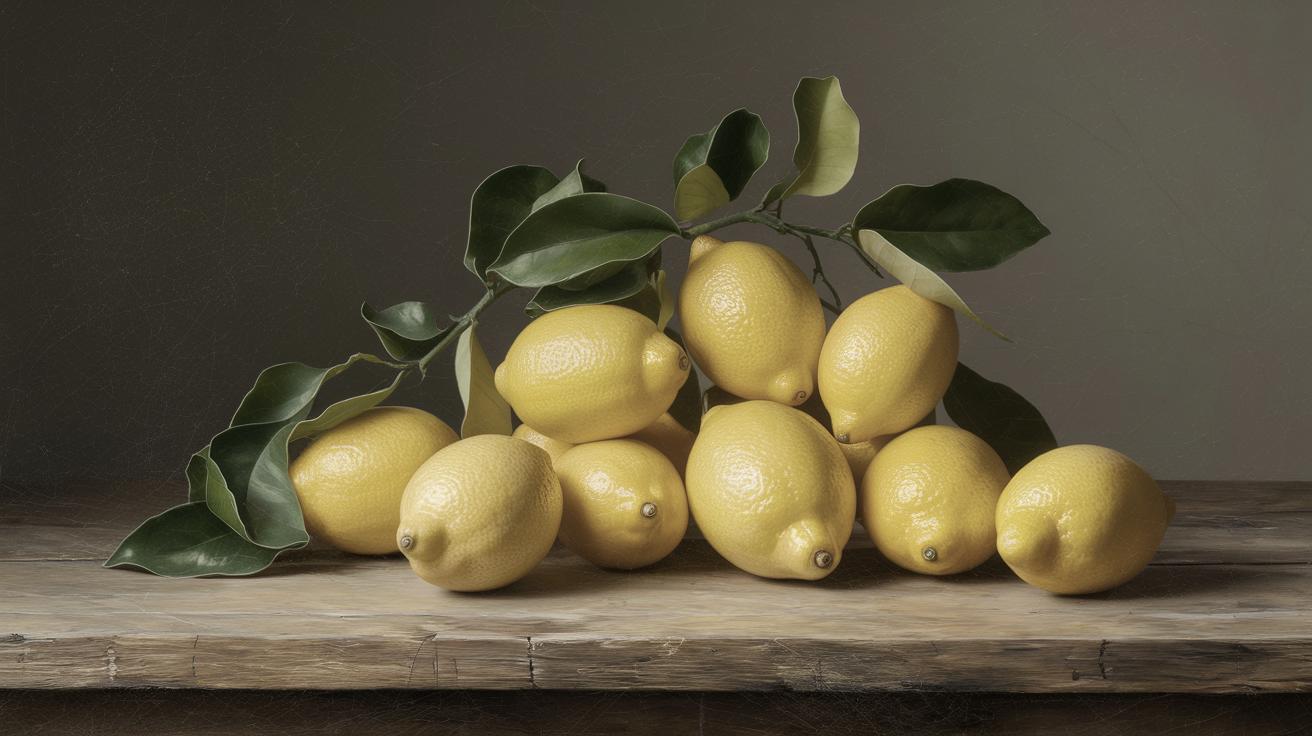
Exploring the Vibrant World of Lemon Still Life Painting
In art, the simple lemon has been a muse for centuries, inspiring artists to capture its vibrant hue and symbolic richness. This blog post delves into the fascinating world of lemon still life paintings, examining their cultural and historical significance. From their prominent place in 18th-century European collections to their intricate rendering by Dutch masters, lemons have traveled a unique path in the art world. By exploring how Asian luxury goods influenced Dutch paintings, we gain a deeper appreciation for the interplay between culture and creativity that has defined art through the ages. Read on to discover how these citrus fruits have contributed to the evolution of still life painting.
The Still Life: On Lemons and Art History
The depiction of lemons in still life paintings can be traced back to their symbolic meanings and aesthetic appeal. Throughout art history, lemons have been used to symbolize the duality of life – their sour taste on the surface, yet essential in numerous culinary and medicinal concoctions, mirrored the bittersweet nature of existence. Artists have often used lemons as a visual metaphor, reflecting deeper philosophical musings within their works.
Furthermore, lemons have served as an exercise in representing texture and color. The challenge of capturing the vibrant yellow, dappled skin, and subtle play of light and shadow has captivated the artistic imagination, calling for skillful manipulation of medium. This focus on realism often placed lemons alongside other household items in still life paintings, making them an enduring component of the genre.
Share
The fascination with lemons in still life can be attributed in part to the fruit’s exotic allure and symbolic resonance. During the age of exploration, lemons and other citrus fruits became new and exciting subjects for artists, cherished for their vibrant colors and associations with far-off lands and luxury. These fruits added an element of exoticism to still life paintings, transforming a domestic scene into one of richness and opulence.
Additionally, lemons symbolize wealth and abundance in European art due to their rarity and high cost at the time. The inclusion of lemons in a painting signified the status and wealth of its owner, becoming luxurious objects that evoked the grandeur and sophistication of refined taste. Thus, lemons served both an aesthetic and a socio-political purpose, allowing artists to explore themes of prosperity and transience.
Share
The depiction of lemons in art also speaks to a broader cultural narrative, where intersections of trade, exploration, and artistic expression merge. Lemons, originally native to Southeast Asia, found their way to Europe and the Americas through the intricate trade networks established during the Renaissance and beyond. This exchange of goods broadened the palette and subject matter available to artists, bringing a new vibrancy to the art of still life.
Thus, lemons serve as a testament to the cultural and economic exchanges that defined the period, enriching the visual tapestry of art. Their incorporation in paintings not only added visual appeal but also underscored the interconnectedness of the global community, providing a window into the evolving landscape of international trade and influence.
Recommended for you
In 18th-century Europe, bizarre oranges and lemons were collector’s items
During the 18th century, the allure of exotic fruits extended beyond mere aesthetic appreciation. Lemons and other citrus fruits evolved into collector’s items, sought after not only for their flavors but also for their novelty as symbols of wealth. These fruits were cataloged and displayed as part of vast curiosities in royal courts and wealthy homes, admired for their diverse forms and colors that paralleled the curious mind of the Enlightenment.
Artisans and artists capitalized on this fascination by incorporating lemons into various forms of art, lending not only realism to their works but showcasing the diverse palette and natural wonders that could be explored through still life painting. The study of these subjects in art circles was also a reflection of a growing interest in the scientific study of nature, where art and science often overlapped.
A Delft touch – the intricate patterns of Pieter de Hooch
The Dutch Golden Age saw a proliferation of still life paintings, where artists like Pieter de Hooch uniquely rendered the textures and subtleties of lemons. De Hooch’s works stand out for the incredible detail and care with which he approached each subject, capturing the play of light upon lemons and the surrounding decorative elements with precision.
De Hooch’s intricate patterns, often found within domestic scenes, paired lemons with the famed Delftware of the period. These ceramic pieces provided a fitting partnership with the fruit, as both symbolized the Dutch mastery of trade and decorative arts. The meticulous depiction of texture and shadow across these still lifes showcased the fruits not just as subjects but as milestones of artistic expression.
How Asian luxury goods found their way into Dutch Golden Age paintings
Asian luxury goods, including porcelain, silk, and spices, were popular subjects in art, thanks to the extensive trade networks established by the Dutch East India Company. Lemons often appeared alongside these objects, indicating the harmonious amalgamation of Eastern and Western influences that characterized this artistic period.
The pairing of lemons with Asian luxury items in art speaks to an era of exploration and consumerism, representing the reach and depth of cultural exchange at the time. These artworks serve as historical documents, illustrating the intersection of economic prosperity and artistic creativity, and highlighting the influence of foreign lands on Dutch society and culture.
Summary of main points
| Topic | Key Points |
|---|---|
| The Still Life: On Lemons and Art History | Explores symbolic meanings, aesthetic appeal, and philosophical musings within still life paintings featuring lemons. |
| Share | Discusses the rarity and status symbol of lemons in still life art, reflecting wealth and luxury in European societies. |
| Share | Highlights cultural narratives and economic exchanges reflected in still life paintings with lemons. |
| In 18th-century Europe, bizarre oranges and lemons were collector’s items | Examines the collector’s appeal of lemons and similar fruits as luxurious and exotic items during the Enlightenment. |
| A Delft touch – the intricate patterns of Pieter de Hooch | Focuses on the detailed and realistic depiction of lemons in de Hooch’s paintings amidst domestic scenes. |
| How Asian luxury goods found their way into Dutch Golden Age paintings | Details the integration of Asian luxury items with lemons in art, showcasing cultural and trade influences in the Dutch Golden Age. |