
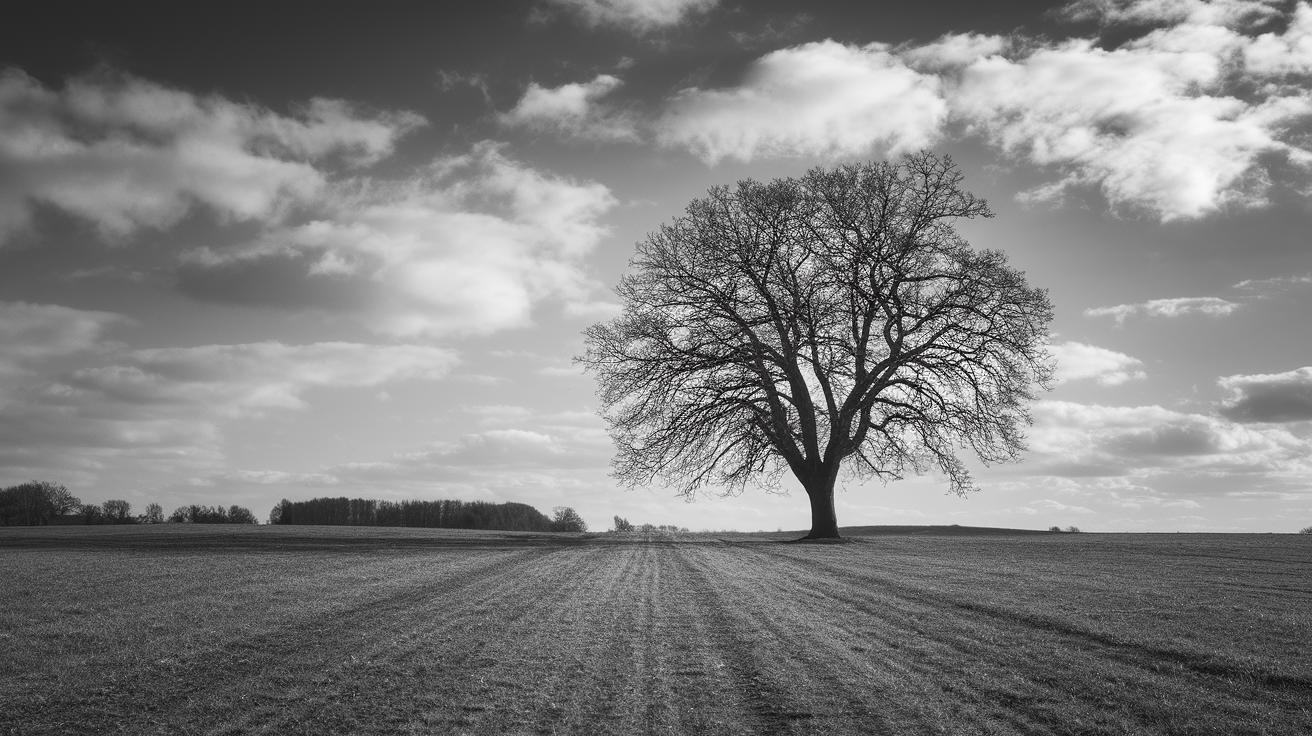
Black and White Realism: Unveiling the Depths of Monochromatic Art
Black and white realism is a compelling art form, capturing the essence and nuances of subjects through the absence of color, relying instead on contrasts and textures. One of the most notable artists in this field is Neville Barbour, whose graphite drawings are a testament to the profound impact of monochromatic imagery. In this blog post, we’ll delve into some of Barbour’s most captivating works, including “Lord of the Flys,” “Janus,” “Xevioso,” and others. We’ll explore how these pieces of art communicate rich narratives and emotions using just shades of grey, highlighting the unique storytelling potential that black and white realism holds.
Graphite Drawings by Neville Barbour
“Lord of the Flys”
Neville Barbour’s “Lord of the Flys” is a fascinating exploration of chaos and innocence lost. Modeled after the themes in William Golding’s iconic novel, Barbour captures the duality of man through stark contrast and intricate detail. The graphite medium allows for a textured depiction of the characters’ internal struggles, where shadows represent the darker instincts lying beneath their civilized facades.
The use of space and composition enhances the unsettling atmosphere. Characters appear trapped within the confines of the paper, their expressions etched with a blend of curiosity and fear. Through his skilled hand, Barbour invites viewers to confront the primal instincts that reside within us all, demonstrating how the absence of color intensifies the raw, unfiltered nature of his subjects.
“Janus”
Named after the Roman god Janus, a symbol of beginnings, transitions, and duality, this drawing examines the notion of dual perspectives. Barbour’s “Janus” intricately details the merging of past and future, of youth and age, within a single representation. The use of graphite enables the seamless blend of tones, creating a fluid image that invites contemplation about the passage of time and the choices we face.
The contrasting elements within the work—light against dark, clarity against ambiguity—reflect the choices inherent in life’s transitions. Barbour captures the ephemeral nature of decisions, using the starkness of black and white to emphasize how every choice begets another path, leaving the viewer pondering the weight of hypothetical journeys left behind.
“Xevioso”
Xevioso, the West African god of thunder, inspires a powerful display of energy and presence in this piece. Barbour’s ability to convey this deity’s majestic and tempestuous nature through simple graphite is remarkable. The interplay between soft, sweeping lines and sharp, jagged edges illustrates the capricious essence of thunder, as Xevioso stands among swirling storms.
In this drawing, Barbour demonstrates his mastery over texture, showing the violent beauty of nature with vivid effect. Depth is achieved through varied shading techniques, creating tension and motion that reverberate throughout the piece. What emerges is a portrait that captures the awe of natural forces as well as the human attempt to understand and channel their power.
“Thoughts for Idia”
This poignant piece pays homage to Queen Idia of Benin, celebrating her strength and wisdom. With fine details, Barbour captures the regal essence of this historic figure, depicting her as a symbol of resilience. Through graphite, the artist illustrates the delicate balance of softness and strength, highlighting Idia’s influential role in African history.
The use of shadow and light emphasizes her dedication and foresight, illustrated in the meticulous details of her crown and expression. Barbour’s work urges viewers to reflect on the complexity of leadership and heritage, offering a monochromatic tribute to a figure whose story transcends time. Through his deft strokes, the piece speaks volumes of cultural pride and historical significance.
“Dahomey in the Café”
“Dahomey in the Café” transports viewers to a bustling 19th-century African café, capturing the vibrant social atmosphere in a subdued palette. Barbour’s use of graphite brings out the rich textures of the scene, from the intricate detailing of the patrons’ attire to the reflective surfaces of everyday objects in the café.
The contrast between lively movement and static stillness, emphasized through strategic shading, marks the dichotomy of a place where conversation and contemplation intertwine. Barbour’s piece highlights cultural motifs with painstaking detail, allowing viewers to sense the pulse of history and community life through the monochrome lens.
“Fisherman of Souls”
“Fisherman of Souls” serves as a mesmerizing depiction of guidance and the search for meaning. This artwork reflects a spiritual narrative where a solitary figure, poised with quiet dignity, casts a net not into the waters, but metaphorically into the souls around him. The graphite techniques effectively convey the ethereal quality of this endeavor.
Barbour employs gradient tones and meticulous textures to portray hope and introspection, guiding the observer through the delicate balance of seeking and finding purpose. The imagery resonates with universal themes of destiny and human connection, inviting deep reflection during the viewing experience. This piece stands as a testament to Barbour’s ability to evoke profound emotion with restrained elements.
“You Remind Me”
“You Remind Me” captures the fleeting nature of memory and nostalgia, adeptly using shadows and light to convey personal history’s haunting, yet gentle, presence. In this intimate piece, Barbour’s skillful use of graphite underscores the impermanence and persistence of memories that shape our identities over time.
The drawing’s layered composition brings nuance to how memories intermingle—some fading into the background, others looming large. Barbour uses subtle gradations to create a luminous ambiguity, reflecting how memories morph and evolve. Each stroke tells a part of a shared story, urging viewers to explore their personal connections to the past.
Next Steps
| Drawing | Theme | Key Features |
|---|---|---|
| “Lord of the Flys” | Chaos and Innocence Lost | Sharp contrasts, internal struggles through shading |
| “Janus” | Dual Perspectives and Transitions | Seamless blend of tones, reflection on time |
| “Xevioso” | Power and Nature | Jagged and soft lines illustrating thunder |
| “Thoughts for Idia” | Resilience and Heritage | Light and shadow emphasizing leadership |
| “Dahomey in the Café” | Culture and Community | Rich textures and cultural motifs |
| “Fisherman of Souls” | Guidance and Meaning | Gradient tones depicting spiritual narrative |
| “You Remind Me” | Memory and Nostalgia | Layered composition with nuanced shadows |