
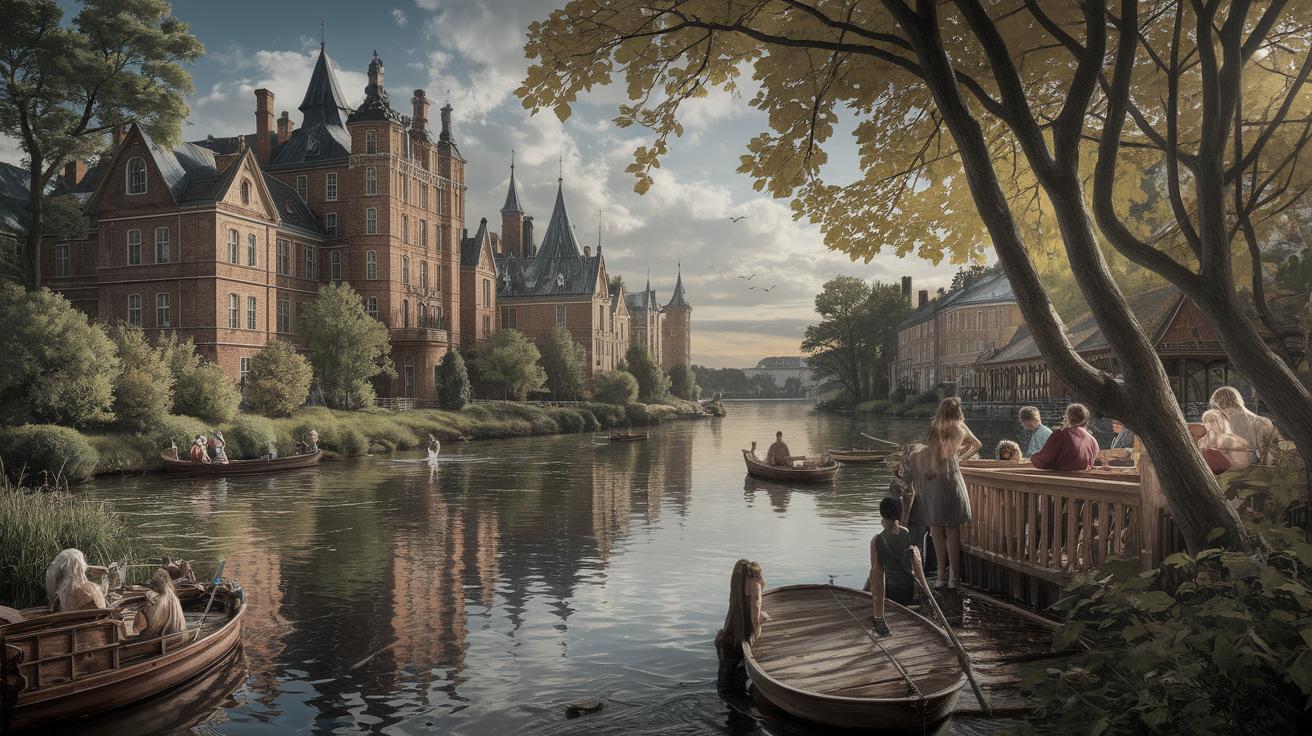
Magical Realism in Art
Magical realism is an influential art style that blends recognizable elements of realism with fantastical or magical components, creating artworks that challenge our perception of everyday life. This unique genre emerged in the early 20th century and was marked by the infusion of imaginative elements within realistic settings. In this blog post, we will explore the roots and influences of magical realism in art, examining how it overlaps with German New Objectivity and surrealism. We will delve into how artists drew inspiration from the Northern Renaissance and utilized striking lighting techniques to amplify their work. Additionally, we will discuss the dual role of magical realism in enhancing and sometimes subverting reality and its prevalent application across Mexico. Through this exploration, we enhance our understanding of how magical realism weaves magic into the fabric of realism, offering depth and insight into the human experience.
Related terms and concepts
Magical realism in art is intricately tied to several related terms and concepts, which help in situating it within the broader art historical context. Fundamentally, magical realism blurs the boundary between what is perceived as reality and the fantastical, creating works that invoke a sense of mystery and wonder. This genre often intersects with the broader cultural movements and expressions, making it a rich field of study.
As a movement, magical realism emerged alongside literary expressions of the same idea, particularly in Latin America, where authors like Gabriel García Márquez popularized the term. In the realm of visual arts, it took on different dimensions, influenced by regional styles and historical contexts. Understanding magical realism involves exploring its intersection with terms like ‘metafiction,’ which refers to the self-referential nature of some artworks that draw attention to their own creation. Additionally, it shares conceptual space with ‘fantasy art,’ but remains distinct due to its grounding in the plausible and the real.
1. The Style Overlapped with German New Objectivity
The emergence of magical realism in art shares historical and stylistic overlap with the German New Objectivity movement of the 1920s. New Objectivity, or Neue Sachlichkeit, arose in the Weimar Republic as a response to the emotional intensity and abstract expressions of the preceding Expressionist movement. It favored an unsentimental and realistic portrayal of subjects, often imbued with a critical reflection on society post-World War I.
Artists within the magical realism sphere tapped into this sober and objective style to ground their otherwise extraordinary narratives. By borrowing the clear-eyed realism of New Objectivity, they created works where the magical seemed plausible, thereby enhancing the impact of the fantastical elements. The precision and attention to detail seen in New Objectivity paintings provided a foundation for the ambiguous twin realities presented in magical realism.
2. It Crossed Lines with Surrealism
Magical realism frequently dovetails with surrealism, a movement officially founded by André Breton in 1924. While both explore the world beyond ordinary experience, they do so with differing intentions and aesthetics. Surrealism delves into the unconscious and irrational, offering fantastical landscapes that defy logical comprehension. In contrast, magical realism incorporates the surreal within the fabric of reality without overtly crossing the boundary into the unreal.
This crossover enriched magical realism with layers of depth. Artists such as Frida Kahlo and Giorgio de Chirico exemplify this interplay; their works showcase ordinary settings imbued with dream-like qualities that prompt viewers to contemplate the mysteries beneath the surface of daily life. Magical realism uses the surreal to amplify the strangeness inherent in the normal, making ordinary scenes resonate with deeper meaning.
3. Magical Realists Took Inspiration From the Northern Renaissance
The meticulous detail and atmospheric depth characteristic of the Northern Renaissance significantly influenced magical realism. Artists from this period, such as Jan van Eyck and Hieronymus Bosch, were celebrated for their nuanced detail and complex use of symbolism—elements that would become foundational in magical realism’s visual language.
By integrating the Northern Renaissance’s precise detailing and subtle symbolism, magical realists achieved a heightened sense of reality intertwined with the mystical. Their works communicated layers of meaning through careful composition and striking visual narratives. The application of light, color, and proportion found in Renaissance art laid the groundwork for magical realists to create worlds that felt both relatable and otherworldly.
4. They Played with Strong Lighting Effects
Lighting plays a pivotal role in how magical realism navigates between the familiar and the enigmatic. Artists employed chiaroscuro—the dramatic use of light and shadow—to accentuate the mystical aspects of their compositions. This technique, popularized during the Renaissance, found renewed application in magical realism where it heightened the mood and drew focus to the ethereal.
Through artful manipulation of light, magical realists crafted scenes replete with tension, intrigue, and depth. These lighting effects often highlighted key narrative elements, casting supernatural components in a believable glow and inviting viewers to immerse themselves in the depicted reality fully. This mastery over light was pivotal in enhancing the emotive power of magical realism, making it a compelling stylistic choice for artists.
5. Magical Realism Enhanced or Subverted Reality
Magical realism is not just about portraying the mystical but also about questioning reality itself. By integrating magical elements into otherwise mundane scenes, artists challenge viewers’ perceptions of truth and authenticity. This can result in a heightened reality where everyday life is expanded to include overlooked possibilities and meanings.
Conversely, magical realism can serve to subvert reality, offering a critique of societal norms and structures. Through allegory and symbolism, artists used their work to expose the absurdity underlying the facade of life. In this way, magical realism becomes a subversive tool, pushing audiences to reevaluate what they accept as truth and to see beyond the surface of their immediate experience.
6. Magical Realism Was Prevalent Across Mexico
In Mexico, magical realism became a prominent artistic vehicle, reflecting the country’s rich cultural tapestry and intricate social realities. Artists such as Diego Rivera and Leonora Carrington utilized this style to reflect Mexico’s complex historical narratives, its indigenous heritage, and the intersection with modernity.
Magical realism in Mexico served as a form of cultural expression that transcended mere representation. It allowed artists to engage with themes of identity, heritage, and sociopolitical commentary. This widespread use of magical realism forged a distinctive visual language that resonated with both national and international audiences, contributing to a broader understanding and appreciation of the genre.
Next steps
| Aspect | Details |
|---|---|
| Related Terms | Metafiction; Fantasy Art |
| German New Objectivity | Realistic portrayal; Society reflection |
| Surrealism | Unconscious exploration; Dream-like qualities |
| Northern Renaissance | Detailed symbolism; Visual language |
| Lighting Effects | Chiaroscuro; Mood enhancement |
| Reality Enhancement/Subversion | Heightened perspectives; Societal critique |
| Prevalence in Mexico | Cultural expression; Identity reflection |

