
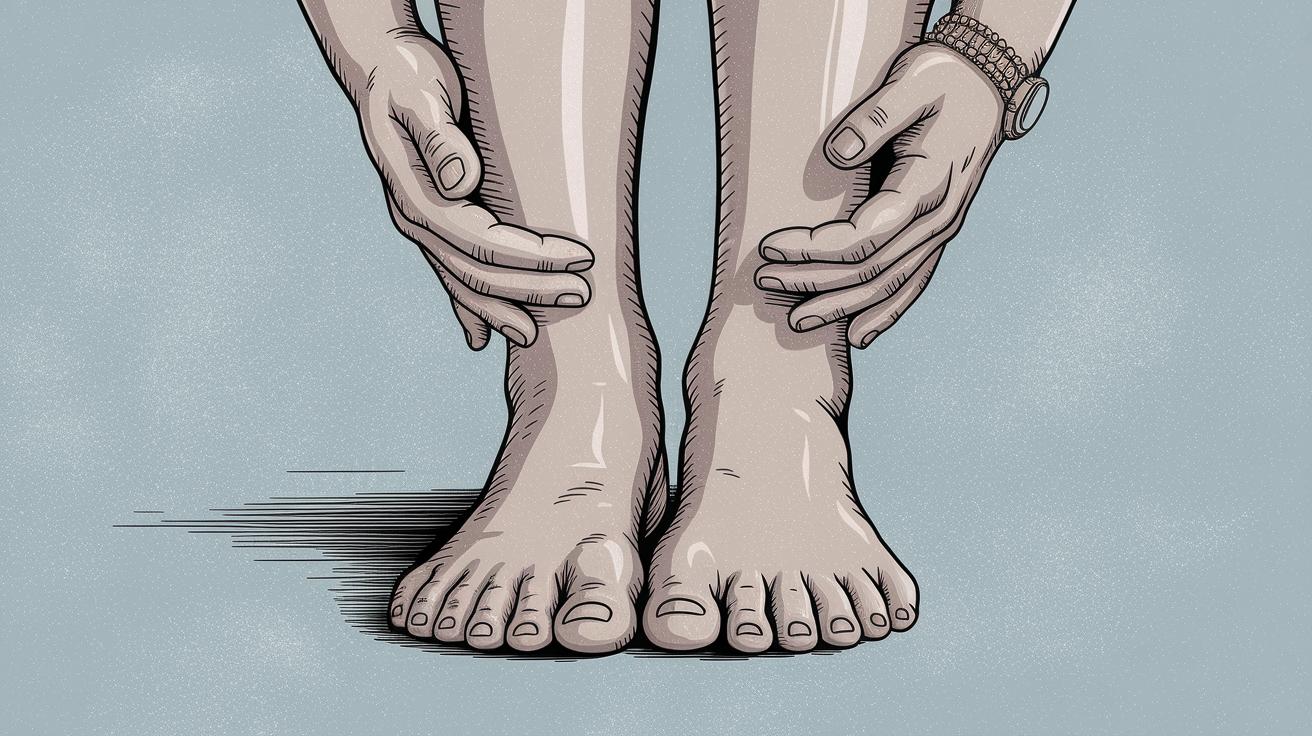
Mastering the Art of Drawing Hands and Feet
Drawing hands and feet can be a daunting task for both beginner and experienced artists alike. Their intricate
anatomy, dynamic poses, and subtle variations challenge many. However, understanding the basic proportions,
learning to differentiate between straight lines and curves, and focusing on specific features like nails and
toes can make the process more manageable. This comprehensive guide offers insights into drawing adult and
children’s hands and feet, emphasizing proportions and step-by-step methods. Whether you’re striving for
realism or a more stylized approach, these techniques will enhance your skills and confidence in portraying
hands and feet convincingly.
Basic Proportions (Hand)
The anatomy of a hand is complex, yet understanding its basic proportions can simplify your artistic journey. A
standard way to approach this is by dividing the hand into three segments: the palm, metacarpals, and fingers.
The palm accounts for about half the total length of the hand, while the fingers make up the rest. Among the
fingers, the middle finger is typically the longest, with the index and ring fingers slightly shorter, and the
little finger and thumb shorter still.
Perceiving the hand as a compilation of simple 3D shapes, such as cuboids and cylinders for the palm and fingers,
can aid in grasping its volume and pose. This technique allows you to capture the hand’s form and perspective
accurately. By prioritizing these proportions, artists can create more lifelike representations of hands, adding
depth and believability to their work.
Children’s Hands
Drawing a child’s hand requires sensitivity to proportion differences compared to adults. Children’s hands
exhibit more rounded shapes and less prominent bone structure, making them appear softer and sometimes more
difficult to articulate accurately. The fingers are generally shorter and less dexterous, each appearing more
cylindrical without the noticeable tapering seen in adult hands.
For realistic portrayals, emphasize the softness by focusing on the subtler curves and making careful use of soft
shading techniques. It’s also essential to capture the playful and less disciplined positioning often found in
children’s hands. Observing the hands of children in everyday activities provides valuable practice in capturing
natural, candid poses.
Straight Lines vs Curves
The interplay between straight lines and curves is key in rendering hands and feet with accuracy and life. While
hands and feet predominantly consist of curves, certain features are better expressed through straight lines.
Straight lines can be utilized to establish the skeletal framework of the hand, particularly around the knuckles
and between the joints, to suggest strength and tension.
Conversely, curves depict the softer tissues and contours, such as the pads of fingers and the arching palm.
Balancing these elements and allowing them to interact harmoniously in your drawings brings fluidity and
realism. Practicing with a variety of setups and lighting conditions can help you master this blend.
Nails
Nails might seem like a minor detail, yet they play a crucial role in depicting hands accurately. Nails are
usually shaped with an arch, following the curvature atop the fingertips. They often vary slightly in shape
depending on the individual’s grooming habits and genetics. Capturing their effect on the light and shadow of
the fingers can significantly enhance the realism of your drawings.
Pay attention to the nails’ proportions relative to the finger length. Notice how they closely align with the top
contour of the finger and how they catch highlights differently due to their texture. A light touch of shading
can convey their slight elevation from the fingertip.
Step by Step
Approaching hand drawing step by step can help manage complexity and result in a more controlled outcome. Begin
by outlining the overall shape of the hand, maintaining an eye on proportions. With a light pencil, sketch the
basic blocks—palm and fingers, ensuring accurate finger lengths.
Once satisfied with the foundational shapes, add details like knuckles, tendons, and nails. Refine lines to
evolve from basic shapes to more nuanced contours. Finalize by shading to create depth and enhance the
three-dimensional feel, taking care to place highlights and shadows based on your light source.
Basic Proportions (Foot)
The foot’s anatomy involves balancing weight and flexibility, demanding careful consideration of its proportions.
Divide the foot into three main areas: the heel, mid-foot with its distinctive arches, and the toes. Typically,
the length of the foot from heel to toe can be sectioned into these thirds. Importantly, the big toe is usually
the longest part, following a gradual decrease in the length of the other toes.
This basic guide helps in capturing the foot’s grounding stance and grace. Recognizing the foot’s structural
role can direct you in sketching it accurately from multiple angles, ensuring that each perspective resonates
with anatomical precision.
Toes
Toes serve as crucial support units that add dynamism to foot depiction. Each toe varies in size and shape,
demanding a keen eye for detail. The big toe often has the most defined and pronounced form, similar to a hand’s
thumb, offering tangible grip and balance functions.
In drawing, emphasize individuality in each toe while respecting the foot’s harmonious design. Study toes under
diverse lighting to appreciate their contours and outlines. Realistically rendered toes subtly convey the foot’s
functional elegance.
Bending
Demonstrating how hands and feet bend captures the full scope of their expressive potential. The joints – both in
fingers and toes – allow a range of motion, crucial for dynamic gestural sketches. Note where the knuckles and
arches create natural breaks in the line.
Practicing with focus on movement calls for observing real-life references or videos that display various motions
like gripping, flexing, and stepping. This methodical practice enriches one’s aptitude for depicting lively and
adaptive postures.
Children’s Feet
Illustrating children’s feet shares similarities with capturing their hands, necessitating an appreciation of
softer and rounder forms. Children’s feet tend to be flat due to undeveloped arches, giving them a unique stance
compared to adult feet.
Note the proportionately larger coordinate of the mid-foot relative to the toes. The toes themselves will appear
more even in length and less splayed out. These characters, alongside observing children in motion, imbues your
artwork with charm and authenticity.
Step by Step (Feet)
Begin by framing the footprint using light geometric shapes to capture the overall size and disposition. Create
an initial guideline for the foot’s arc from the heel through the ball of the foot to the toes. Earmark where
the arch and ankle sit prominently.
Progress to articulating each toe, maintaining cohesion with the main foot mass while distinctly shaping each
toe. Once the structure is in place, refine your lines, adding texture and shading thoughtfully to emphasize the
foot’s contour amidst light and shadows.
Next Steps
| Section | Key Focus |
|---|---|
| Basic Proportions (Hand) | Understanding proportions with simple 3D shapes. |
| Children’s Hands | Focusing on softer, rounder shapes and less pronounced bones. |
| Straight Lines vs Curves | Balancing skeletal frameworks with soft tissue contours. |
| Nails | Accentuating top curvature and light interplay. |
| Step by Step (Hands) | Building from basic shapes, refining and shading. |
| Basic Proportions (Foot) | Dividing foot into heel, mid-foot, and toes. |
| Toes | Conveying individuality and matching foot harmony. |
| Bending | Understanding joint motion for dynamic depiction. |
| Children’s Feet | Emphasizing flatness and softer mid-foot. |
| Step by Step (Feet) | Starting with footprints, adding texture and shading. |

