
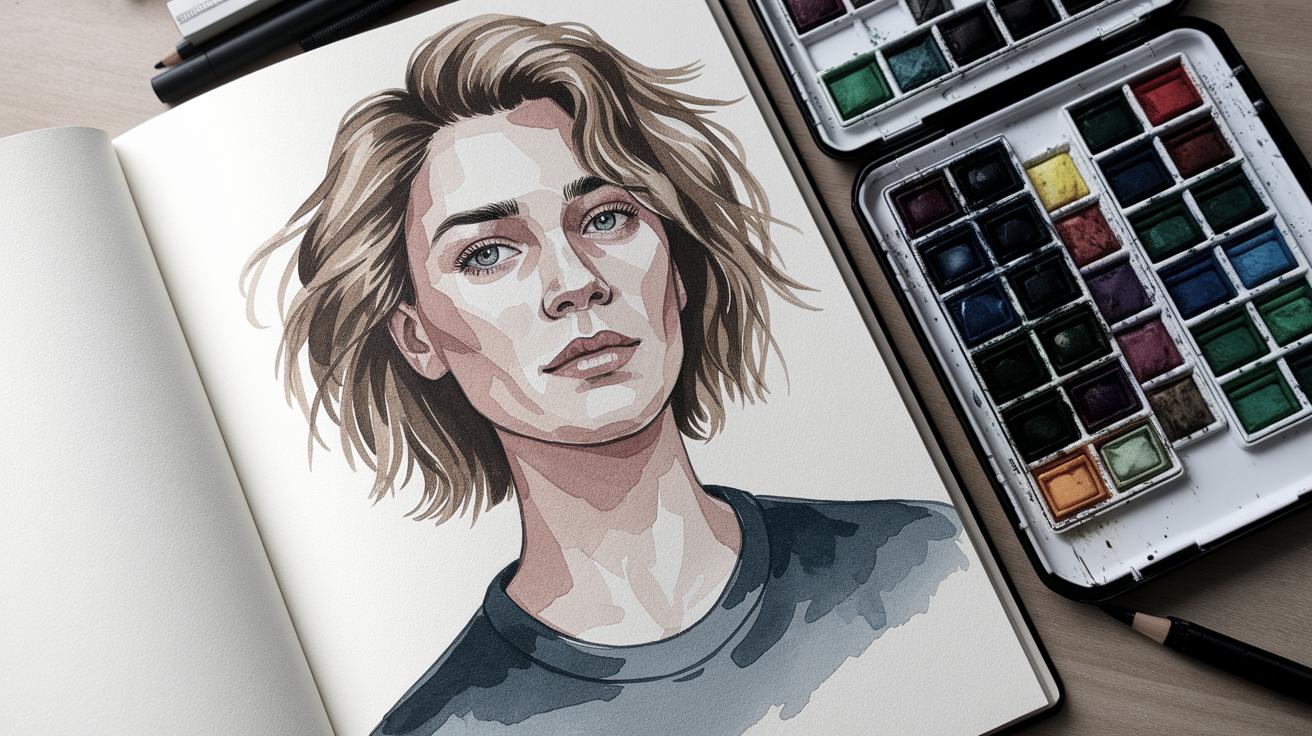
Master realistic watercolor figure drawing with proven techniques from professional artists. Transform your artistic skills through expert guidance on composition, values, and expressive brushwork.
Essential Foundations of Watercolor Figure Drawing
Watercolor figure drawing represents one of the most challenging yet rewarding forms of artistic expression in contemporary art. This comprehensive medium combines the transparency of watercolors with the precision required for anatomical accuracy.
Professional watercolor artists consistently emphasize three core principles: observational accuracy, color temperature control, and strategic water management. These fundamentals separate amateur attempts from gallery-worthy pieces that capture both physical likeness and emotional depth.
Understanding Watercolor Properties for Figure Work
The unique characteristics of watercolor pigments directly impact figure drawing success. Granulating pigments like ultramarine blue and burnt umber create natural skin texture variations. Staining colors such as alizarin crimson and phthalo blue require careful application due to their permanent nature.
Water-to-pigment ratios determine the final appearance of flesh tones and shadows. Professional artists maintain consistent moisture levels throughout the painting process to achieve seamless color transitions essential for realistic figure representation.
Quick Capture Techniques: The 10-Minute Challenge
10-Minute Thumbnail Sketch Challenge: Birds
Thumbnail sketches serve as fundamental exercises for developing rapid observation skills essential in figure drawing. The 10-minute bird sketch challenge trains artists to identify and capture essential forms while eliminating unnecessary details.
This exercise develops gesture recognition – the ability to perceive and translate movement into static artwork. Professional illustrators use similar techniques when working with live models, where capturing the essence of pose takes precedence over photographic accuracy.
Birds offer unique advantages as practice subjects due to their dynamic poses and delicate plumage structures. The challenge encourages instinctive mark-making while maintaining awareness of proportional relationships and anatomical accuracy.
Successful bird sketches demonstrate fluid brushwork that mimics natural movement patterns. Artists develop muscle memory for confident strokes while training their eyes to recognize essential structural elements within complex forms.
Advanced Gesture Drawing Applications
Professional figure artists extend these rapid sketching principles to human subjects through gesture drawing sessions. Five to ten-minute poses challenge artists to capture essential body language and emotional expression without surface details.
Contemporary art schools emphasize gesture work as foundation training for all figure drawing disciplines. Students who master quick capture techniques demonstrate significantly improved performance in longer, detailed studies.
Botanical Studies: Building Observational Skills
A Floral Spotlight: Each Iris Has Its Own Personality
Botanical watercolor studies provide essential training for figure artists by developing detailed observation skills and color mixing expertise. Iris flowers present complex structural challenges similar to human anatomy, with overlapping forms and subtle color variations.
Each iris variety displays unique characteristics requiring individual artistic interpretation. The bearded iris features distinctive fuzzy standards, while Siberian iris varieties showcase sleeker, more linear petal arrangements.
Professional botanical artists emphasize the importance of understanding underlying plant architecture before applying color. This structural knowledge directly translates to figure drawing, where skeletal and muscular understanding improves surface rendering accuracy.
Successful iris paintings demonstrate layered watercolor techniques essential for realistic figure work. Artists build color depth through transparent glazes while preserving luminosity – skills directly applicable to rendering human skin tones and fabric textures.
Color Temperature in Natural Subjects
Floral studies teach critical color temperature relationships that enhance figure drawing realism. Warm and cool color interactions create depth and dimensional illusion essential for convincing three-dimensional representation.
Professional artists observe how natural lighting affects local colors in botanical subjects. These observations inform their approach to figure painting, where similar lighting principles determine skin tone variations and shadow colors.
Compositional Mastery and Value Planning
Starting a Painting with Design and Values
Successful watercolor figure drawings begin with comprehensive compositional planning and value structure development. Professional artists invest 20-30% of their total painting time in preliminary design work to ensure strong visual foundations.
Value sketches establish the painting’s tonal roadmap before color application begins. This approach prevents common watercolor mistakes such as muddy color mixing and weak contrast relationships that plague inexperienced artists.
Contemporary art instruction emphasizes the notan principle – the arrangement of light and dark masses that create compelling visual compositions. This Japanese concept provides a framework for organizing complex figure arrangements into readable, impactful designs.
Digital tools now complement traditional value planning methods. Many professional watercolorists use tablet applications to test compositional arrangements before committing to expensive watercolor paper.
The Golden Ratio in Figure Composition
Classical proportional systems continue to influence contemporary figure drawing composition. The golden ratio provides mathematical guidelines for placing focal points and organizing visual elements within the picture plane.
Professional portrait artists frequently position key facial features along golden ratio divisions. This creates naturally pleasing compositions that hold viewer attention while maintaining visual balance throughout the artwork.
Advanced Watercolor Techniques for Realism
Indicate, Don’t Illustrate
The principle of selective focus distinguishes professional watercolor work from amateur illustration attempts. Master artists understand that suggesting detail often creates more powerful visual impact than rendering every visible element.
This approach leverages watercolor’s inherent transparency and fluidity to create atmospheric effects impossible in opaque media. Viewers’ imaginations complete partially rendered areas, creating active engagement with the artwork.
Professional figure artists employ lost and found edges to guide viewer attention while maintaining painterly quality. Hard edges define focal areas, while soft transitions create supporting elements that enhance rather than compete with primary subjects.
Contemporary watercolor instruction emphasizes economy of means – achieving maximum visual impact through minimal, well-placed marks. This efficiency requires deep understanding of both subject matter and medium capabilities.
Wet-on-Wet vs. Wet-on-Dry Applications
Wet-on-wet techniques create soft, atmospheric effects ideal for background areas and subtle color transitions. Professional artists control water application timing to achieve predictable results while maintaining spontaneous appearance.
Wet-on-dry applications provide crisp edges and precise color placement essential for detailed figure work. Mastering both approaches allows artists to create varied textural effects within single paintings.
Professional Case Studies and Examples
Painting of the Week: “Old Copper and Fruit”
This featured still-life demonstrates advanced watercolor techniques applicable to figure drawing through its masterful handling of form, light, and atmospheric perspective. The artist’s approach to rendering metallic surfaces provides insights for painting jewelry and accessories in portrait work.
The painting showcases temperature modulation – the subtle shift between warm and cool colors that creates convincing three-dimensional form. Professional figure artists apply identical principles when rendering skin tones and fabric textures.
Careful observation reveals the artist’s use of selective detail – areas of sharp focus contrasted with softer, less defined passages. This technique directs viewer attention while maintaining overall compositional unity.
The work exemplifies professional color mixing strategies, with each hue carefully considered for its relationship to surrounding colors. This systematic approach prevents the muddy color problems that frequently plague watercolor beginners.
Contemporary Master Artist Techniques
Leading contemporary watercolorists like Joseph Zbukvic and Alvaro Castagnet demonstrate advanced figure painting approaches through their workshop instruction and published techniques. Their methods emphasize confident brushwork and strategic color placement.
Professional artists consistently emphasize the importance of value relationships over color accuracy. Students who master tonal structure create more convincing figure drawings regardless of their color mixing expertise.
Technical Considerations for Professional Results
Paper Selection and Preparation
Professional-grade watercolor paper significantly impacts final artwork quality. Cold-pressed papers provide ideal texture for figure work, offering enough tooth to hold pigment while allowing smooth color application.
Paper weight affects paint handling characteristics and final appearance. 300gsm papers resist buckling under heavy water application, essential for large figure studies requiring multiple wet-on-wet passages.
Brush Selection for Figure Work
Professional watercolor brushes designed for figure painting include round brushes in sizes 6, 10, and 14 for general work, plus smaller detail brushes for facial features and fine textures.
Natural hair brushes hold more water and pigment than synthetic alternatives, allowing for longer, more controlled strokes essential for smooth color transitions in figure work.
Common Challenges and Solutions
Overcoming Muddy Colors
Muddy colors result from overmixing pigments or using too many colors in single passages. Professional artists limit their palette to three or four colors per mixing session to maintain color clarity.
Understanding color temperature relationships prevents muddy mixing by ensuring warm and cool colors balance appropriately. Each color mixture should lean toward either warm or cool temperature for maximum vibrancy.
Managing Water Control
Consistent water management separates professional results from amateur attempts. Artists develop timing sensitivity for optimal paint application, understanding how paper moisture affects pigment behavior.
Professional techniques include using separate water containers for clean and dirty water, plus maintaining multiple moisture levels on the palette for varied paint consistency.
Building a Professional Practice
Daily Sketching Routines
Professional artists maintain daily drawing practices to develop and maintain observational skills. Even 15-minute daily sessions produce measurable improvement over time.
Consistent practice develops muscle memory for confident mark-making while training the eye to recognize essential structural relationships in complex subjects.
Study from Master Works
Analyzing masterpiece watercolors provides insights into professional techniques and approaches. John Singer Sargent’s watercolor portraits demonstrate confident brushwork and strategic color placement that contemporary artists continue to study.
Master work analysis reveals decision-making processes behind successful paintings, helping developing artists understand when to add detail and when to suggest form through minimal marks.
Lessons Learned
| Topic | Key Insights | Professional Application |
|---|---|---|
| Thumbnail Sketch Challenge | Quick captures of movement and form enhance observational skills and creativity. | Develops gesture recognition essential for live figure drawing sessions |
| Floral Spotlight | Understanding the unique characteristics of each flower enriches their portrayal in art. | Builds detailed observation skills transferable to human anatomy study |
| Design and Values | A strong composition and clear value definition lay the foundation for effective watercolor paintings. | Prevents common watercolor mistakes through systematic planning approach |
| Indication vs. Illustration | Suggestive marks invite viewer interaction and maintain the fluidity of watercolor art. | Creates professional-quality work through selective focus and economy of means |
| Painting of the Week | “Old Copper and Fruit” exemplifies timeless aesthetic through balanced composition and color harmony. | Demonstrates advanced techniques applicable to figure drawing and portrait work |
Advanced Learning Resources
Professional development in watercolor figure drawing requires ongoing education through workshop attendance, online instruction, and peer critique groups. Leading art schools offer specialized programs focusing on watercolor techniques and figure drawing integration.
Contemporary artists benefit from digital learning platforms that provide access to master artist instruction previously available only through expensive workshop attendance. These resources democratize professional-level art education.
Building Your Artistic Voice
Developing a personal artistic style requires balancing technical proficiency with individual creative expression. Professional artists spend years refining their approach while maintaining connection to classical training principles.
The most successful contemporary watercolor figure artists combine traditional techniques with personal interpretation, creating work that honors the medium’s history while expressing contemporary sensibilities.